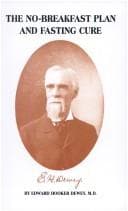
The No Breakfast Plan and the Fasting-CureDewey, Edward Hooker
Science
The No Breakfast Plan and the Fasting-Cure
Dewey, Edward Hooker
Fasting; Nutrition
The forty-fourth day of the fast was the busiest of all with her. She
arose at 8.30 A. M. to attend to her affairs until the late afternoon,
when she and her friend met a sister, by appointment from her home, at
the Exposition. Several hours were spent there, and when they took the
street car for return the only vacant seat was accepted by the sister,
because she was tired, and not knowing that there were forty-four days
without food with her sister, who was not tired. A striking feature of
these daily walks was that they did not cause marked fatigue. Miss
Kuenzel retired near midnight without unusual fatigue, and so ended the
forty-fourth day of the fast.
I quote from the _Chester County Times_ of Feb. 12, 1899:
"'Conclusive evidence is being multiplied as to the wonderful
power of fasting in the restoration of health, but it is only
more recently that its power in the case of insanity is even yet
more wonderful. A recent case is as near home as the city of
Philadelphia, and those interested are very willing that others
may know of it, so that its usefulness may be extended and its
value appreciated. The discovery was made by Dr. E. H. Dewey, of
Meadville, Pa., and tidings of the good work are being spread by
Charles C. Haskell & Son, of Norwich, Conn. The editor of this
paper knows somewhat the value of the discovery by an experience
of several years. We give a letter from the lady who was cured.
"'PHILADELPHIA, PA., Dec. 12, 1899.
"'_My Dear Mr. Haskell:_
Public-domain text, read in full here on John Shaqi.
Reviews
Reviews
No reviews yet
Be the first to share your thoughts on this work.
Elsewhere in the archive
Join the Discussion
Join the discussion
Sign in to leave a comment or review.
Sign InorCreate an account