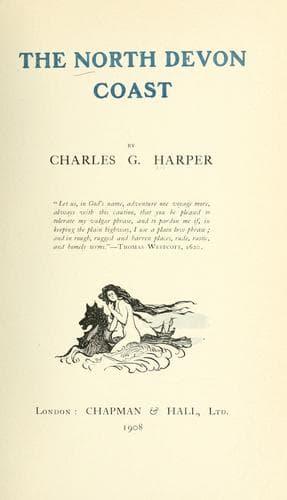
The North Devon CoastHarper, Charles G. (Charles George)
History
The North Devon Coast
Harper, Charles G. (Charles George)
Devon (England) -- Description and travel
Barnstaple Friday market, held every week, is to this day an
astonishing revelation to the stranger of the amount of business done
in the great market buildings. On any other day he will find the town
so quiet that the excellent shops and the many strikingly expensive
new buildings seem to require some explanation. Friday, however, when
every street is thronged, removes any such necessity. And the annual
occasion of Barnstaple Fair, opened with some ceremony on September
19th by the Mayor, is still a great event in North Devon. On that
momentous day the Mayor and Corporation regale a select company at
lunch, after an old custom, with spiced ale and toast; and still the
stuffed white glove, old-time symbol to debtors that they may adventure
into the town during the continuance of the fair without fear of
arrest, is displayed outside the Town Hall, although its significance
is not now of much moment to either debtor or creditor.
[Illustration: BARNSTAPLE CHURCH AND GRAMMAR SCHOOL.]
In 1642 there burst upon the quiet Barnstaple folk, only too anxious
to be let alone to manufacture woollens, and to import foreign wines,
and so grow rich in trade, the great Civil War. The town was very
comfortable then; still rich with the privateering of years before,
but by force of circumstances, more respectable, for England had been
for awhile at peace with Spain, and throat-cutting, treasure-grabbing
expeditions, once patriotic, would then have been sheer piracy on
the high seas. In this highly proper mood, and with their commercial
instincts outraged by King Charles’ illegal demands for Ship Money,
and the like exactions, it is not surprising that Barnstaple people
declared for the Parliament. But the vindictiveness with which they
took that side is surprising. Not content to remain splendidly
defensive of their rights and their money-bags, they detailed a force
to go and attack the small Royalist force holding Torrington. They were
successful, and drove out 500 men, killed 10, took 40 prisoners and 200
stand of arms. The Royalists were further worsted at Sourton Down, on
the borders of Dartmoor, but regained their position in the West at the
battle of Stratton, where Sir Bevil Grenville most severely defeated
the Roundheads, and subsequently demonstrating against Bideford,
planted a Royalist garrison in a fort at Appledore commanding the sea
approaches to Bideford and Barnstaple; with the looked-for result
attending that last strategical disposition. Barnstaple surrendered,
September 2nd, 1643, and the Royalists took possession. And here they
remained, in fancied security, until the townsfolk revolted and retook
possession. Appledore fort, however, held out, and within the month
another force of King’s men, marching upon Barum, again reduced it.
The Royalist position here then became so secure, that the Prince of
Wales (afterwards Charles the Second) was sent here for safety, with
his tutor, and remained until July 1645, when it was thought safer,
Public-domain text, read in full here on John Shaqi.
Reviews
Reviews
No reviews yet
Be the first to share your thoughts on this work.
Elsewhere in the archive
Join the Discussion
Join the discussion
Sign in to leave a comment or review.
Sign InorCreate an account