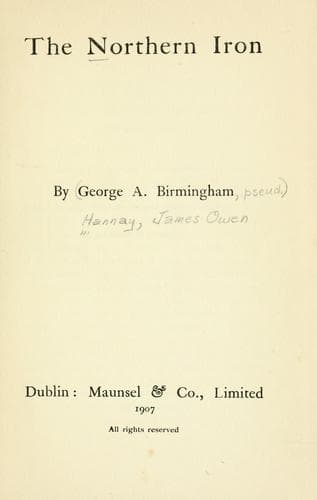
Historical fiction; Ireland -- History -- Rebellion of 1798 -- Fiction
He found the roads round Donegore Hill guarded by sentries. The camp
on the top of the old rath had all the appearance of being held by
disciplined troops. There was little sign of the disorganisation and
panic which often follow defeat. The men were calm, self-possessed, and
reasonable, but they were hopeless. Neal realised that this army, at
least, would do no more serious fighting. The men were anxious to make
terms for themselves and for their leaders. They were perfectly well
aware that they were beaten, and could not expect to make any head
against their enemies.
Neal found James Hope, and was warmly greeted by him.
“When I discovered that we’d left you behind,” said Hope, “I made up
my mind that you must have been shot down along with your uncle and the
fine fellows who made a stand with him. Ah, Neal, we’ve lost many--your
uncle, Felix Marier, poor Moylin, and many another. One killed here,
another there, but all of them in doing their duty. But we mustn’t talk
of these things, lad. Tell me, what brings you here?”
“Need you ask?” said Neal. “I am come to fight it out to the last.”
“Take my advice and slip off home. There’s no good to be done by
stopping with us. Things are desperate. Most of our people are going
home to-day. M’Cracken and a handful--not more than a hundred--are going
to Slievemis in the hope of being able to join Monro in County Down, or
perhaps to get through to the Wexford men.”
“I will go with you.”
“No, no, lad, you’ve done enough. You’ve done a man’s part. Go home
now.”
“What are you going to do?”
“I? Oh, I’m only a poor weaver. It doesn’t matter what I do. I’m going
on with M’Cracken.”
“So am I. Listen to me, James Hope, till I tell you what is in my
mind--till I tell you what has happened to me since yesterday.”
They sat on the grassy slope of the old rath. The wide plain stretched
before them--green, well wooded, beautiful. There lay Adair’s
plantations, the Six Mile Water winding like a serpent among the fields,
the woods of Castle Upton, and the young trees on Lyle Hill, with the
distant water of Lough Neagh glistening in the sunlight. Nearer at hand
thatched farmhouses smoked, signs that the yeomen were enjoying the
fruits of victory. Hope pointed to Farranshane, where William Orr’s
house was burning--a witness to a malignity so bitter that it wreaked
the vengeance from which the dead man was safe on his widow and his
orphans.
Neal told his story, and spoke of the passionate desire for revenge
which burned in him. Hope listened patiently to every word. Then he
spoke.
Public-domain text, read in full here on John Shaqi.
Reviews
Reviews
No reviews yet
Be the first to share your thoughts on this work.
Elsewhere in the archive
Join the Discussion
Join the discussion
Sign in to leave a comment or review.
Sign InorCreate an account