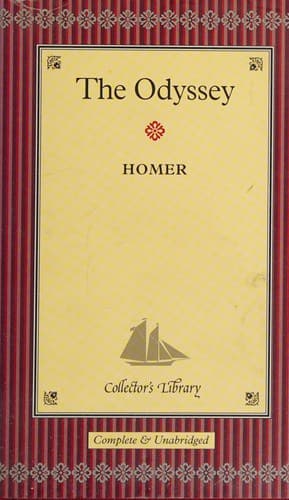
Epic poetry, Greek -- Translations into English; Homer -- Translations into English; Odysseus, King of Ithaca (Mythological character) -- Poetry
“What noble beast in this abandon’d state
Lies here all helpless at Ulysses’ gate?
His bulk and beauty speak no vulgar praise:
If, as he seems, he was in better days,
Some care his age deserves; or was he prized
For worthless beauty? therefore now despised;
Such dogs and men there are, mere things of state;
And always cherish’d by their friends, the great.”
“Not Argus so, (Eumaeus thus rejoin’d,)
But served a master of a nobler kind,
Who, never, never shall behold him more!
Long, long since perish’d on a distant shore!
Oh had you seen him, vigorous, bold, and young,
Swift as a stag, and as a lion strong:
Him no fell savage on the plain withstood,
None ’scaped him bosom’d in the gloomy wood;
His eye how piercing, and his scent how true,
To wind the vapour on the tainted dew!
Such, when Ulysses left his natal coast:
Now years unnerve him, and his lord is lost!
The women keep the generous creature bare,
A sleek and idle race is all their care:
The master gone, the servants what restrains?
Or dwells humanity where riot reigns?
Jove fix’d it certain, that whatever day
Makes man a slave, takes half his worth away.”
This said, the honest herdsman strode before;
The musing monarch pauses at the door:
The dog, whom Fate had granted to behold
His lord, when twenty tedious years had roll’d,
Takes a last look, and having seen him, dies;
So closed for ever faithful Argus’ eyes!
And now Telemachus, the first of all,
Observed Eumaeus entering in the hall;
Distant he saw, across the shady dome;
Then gave a sign, and beckon’d him to come:
There stood an empty seat, where late was placed,
In order due, the steward of the feast,
(Who now was busied carving round the board,)
Eumaeus took, and placed it near his lord.
Before him instant was the banquet spread,
And the bright basket piled with loaves of bread.
Next came Ulysses lowly at the door,
A figure despicable, old, and poor.
In squalid vests, with many a gaping rent,
Propp’d on a staff, and trembling as he went.
Then, resting on the threshold of the gate,
Against a cypress pillar lean’d his weight
Smooth’d by the workman to a polish’d plane);
The thoughtful son beheld, and call’d his swain
“These viands, and this bread, Eumaeus! bear,
And let yon mendicant our plenty share:
And let him circle round the suitors’ board,
And try the bounty of each gracious lord.
Bold let him ask, encouraged thus by me:
How ill, alas! do want and shame agree!”
Public-domain text, read in full here on John Shaqi.
Reviews
Reviews
No reviews yet
Be the first to share your thoughts on this work.
Elsewhere in the archive
Join the Discussion
Join the discussion
Sign in to leave a comment or review.
Sign InorCreate an account