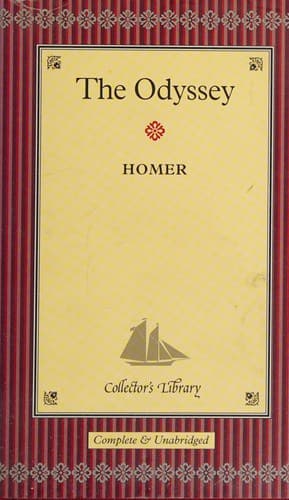
Epic poetry, Greek -- Translations into English; Homer -- Translations into English; Odysseus, King of Ithaca (Mythological character) -- Poetry
Then to the gods the rosy juice he pours,
And the drain’d goblet to the chief restores.
Stung to the soul, o’ercast with holy dread,
He shook the graceful honours of his head;
His boding mind the future woe forestalls,
In vain! by great Telemachus he falls,
For Pallas seals his doom: all sad he turns
To join the peers; resumes his throne, and mourns.
Meanwhile Minerva with instinctive fires
Thy soul, Penelope, from Heaven inspires;
With flattering hopes the suitors to betray,
And seem to meet, yet fly, the bridal day:
Thy husband’s wonder, and thy son’s to raise;
And crown the mother and the wife with praise.
Then, while the streaming sorrow dims her eyes,
Thus, with a transient smile, the matron cries:
“Eurynome! to go where riot reigns
I feel an impulse, though my soul disdains;
To my loved son the snares of death to show,
And in the traitor friend, unmask the foe;
Who, smooth of tongue, in purpose insincere,
Hides fraud in smiles, while death is ambush’d there.”
“Go, warn thy son, nor be the warning vain
(Replied the sagest of the royal train);
But bathed, anointed, and adorn’d, descend;
Powerful of charms, bid every grace attend;
The tide of flowing tears awhile suppress;
Tears but indulge the sorrow, not repress.
Some joy remains: to thee a son is given,
Such as, in fondness, parents ask of Heaven.”
“Ah me! forbear!” returns the queen, “forbear,
Oh! talk not, talk not of vain beauty’s care;
No more I bathe, since he no longer sees
Those charms, for whom alone I wish to please.
The day that bore Ulysses from this coast
Blasted the little bloom these cheeks could boast.
But instant bid Autonoe descend,
Instant Hippodame our steps attend;
Ill suits it female virtue, to be seen
Alone, indecent, in the walks of men.”
Then while Eurynome the mandate bears,
From heaven Minerva shoots with guardian cares;
O’er all her senses, as the couch she press’d,
She pours, a pleasing, deep and death-like rest,
With every beauty every feature arms,
Bids her cheeks glow, and lights up all her charms;
In her love-darting eyes awakes the fires
(Immortal gifts! to kindle soft desires);
From limb to limb an air majestic sheds,
And the pure ivory o’er her bosom spreads.
Such Venus shines, when with a measured bound
She smoothly gliding swims the harmonious round,
When with the Graces in the dance she moves,
And fires the gazing gods with ardent loves.
Then to the skies her flight Minerva bends,
And to the queen the damsel train descends;
Waked at their steps, her flowing eyes unclose;
The tears she wipes, and thus renews her woes:
“Howe’er ’tis well that sleep awhile can free,
With soft forgetfulness a wretch like me;
Oh! were it given to yield this transient breath,
Send, O Diana! send the sleep of death!
Why must I waste a tedious life in tears,
Nor bury in the silent grave my cares?
O my Ulysses! ever honour’d name!
For thee I mourn till death dissolves my frame.”
Public-domain text, read in full here on John Shaqi.
Reviews
Reviews
No reviews yet
Be the first to share your thoughts on this work.
Elsewhere in the archive
Join the Discussion
Join the discussion
Sign in to leave a comment or review.
Sign InorCreate an account