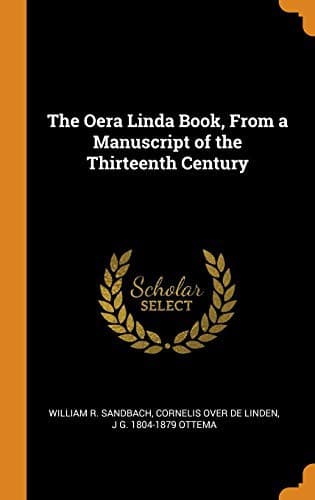
The Oera Linda Book, from a Manuscript of the Thirteenth Century
History
The Oera Linda Book, from a Manuscript of the Thirteenth Century
Frisian language -- Texts
100 ånd 1 jêr [26] nêi that âldland svnken is, kêm thêr ut-et âsta en
folk wêi. Thåt folk was vrdrêven thrvch en ôther folk, åfter vs twisk
land krêjon hja twispalt, hja skifton hjara selva an twam hâpa, ek hêr
gvng sines wêiges. Fon-t êne dêl nis nên tâl to vs ne kêmen, men thåt
ôre dêl fyl åfter to vs Skênland. Skênland was sunnich bifolkath,
ånd anda åfter-kâd thåt sunnichste fon al. Thêrvmbe machton hja-t
svnder strid wrwinna, ånd uthâwede hja ôwers nên lêth ne dêdon,
nildon wi thêrvr nên orloch hâ. Nw wi hjam håvon kånna lêred,
sâ willath wi ovir hjara sêda skriwa, åfternêi ho-t vs mith hjam
forgungen is. Thåt folk was navt ne wild lik fêlo slachta Findas,
men êlik anda Égipta-landar, hja håvath prestera lik tham ånd nw hja
kårka håve âk byldon. Tha prestera send tha engosta hêra, hja hêton
hjara selva Mâgjara, hjara aller ovirste hêt Magy, hi is hâvedprester
ånd kêning mith ên, allet ôre folk is nul in-t siffer ånd êllik ånd
al vnder hjara weld. Thåt folk nêth navt ênis en nôme, thrvch vs send
hja Finna hêten, hwand afskên hjara fêrsta algadur drov ånd blodich
send, thach send hja thêr alsa fin vp, that wi thêr bi åfter stâne,
forth ne send hja navt to binydane, hwand hja send slâvona fon tha
presterum ånd jeta fül årger fon hjara mêninga. Hja mênath that ella
fvl kvada gâston is, thêr inda månniska ånd djara gluppe, men fon
Wr.aldas gâst nêton hja nawet. Hja håvath stêne wêpne, tha Magjara
kâpra. Tha Magjara tellath that hja tha årge gâston banna ånd vrbanna
mügon, thêr vr is-t folk ôlan in ange frêse ånd vppira wêsa nis nimmer
nên blydskip to bisjan. Thâ hja god sêten wêron, sochton tha Magjara
athskip bi vs, hja bogadon vp vsa tâl ånd sêdum, vp vs fja ånd vppa vs
ysere wêpne, thêr hja gêrn to fori hjara goldun ånd sulvere syrhedum
wandela wilde, ånd hjara tjoth hildon hja immerthe binna tha pêlon,
men thåt vrskalkton vsa wâkendom. Achtantich jêr forther, just wêr-et
jol-fêrste, thêr kêmon hja vnwarlinge lik snêi thrvch stornewind drêwen
ovir vsa landa to runnande. Thêr navt flya machton wrdon vrdên, Frya
wårth anhropen, men tha Skênlandar hêdon hira rêd warlâsed. Thâ wrdon
kråfta sâmlath, thri pêlun fon Goda-his burch [27] wrdon hja wither
stonden, tha orloch bilêv. Kât jefta Kâter-inne, alsa hête thju fâm,
thêr burchfâm to Goda burch was. Kât was stolte ånd hâchfâranda,
thêrvmbe ne lêt hju nên rêd ni follistar anda Moder ne frêja. Men
thâ tha burchhêra thåt fâta, thâ svndon hja selva bodon nêi Texlând
nêi thêre Moder thâ. Minna alsa was thêre Moder-is nôme, lêt âla tha
stjurar mânja ånd âl-et othera jongk folk fon Ast-flyland ånd fon
tha Dênnemarkum. Ut thesse tocht is thju skydnese fon Wodin bern,
sa-r vppa burgum wryten is ånd hir êskrêven. Anda Alder-gâmude [28]
thêr reste en alde sêkåning. Sterik was sin nôme ånd tha hrop vr sina
dêda was grât. Thisse alde rob hêde thrê nêva; Wodin thene aldeste
hêmde to Lumka-mâkja [29] bi thêre Ê-mude to Ast-flyland by sin eldrum
t-us. Ênes was er hêrman wêst.
Public-domain text, read in full here on John Shaqi.
Reviews
Reviews
No reviews yet
Be the first to share your thoughts on this work.
Elsewhere in the archive
Join the Discussion
Join the discussion
Sign in to leave a comment or review.
Sign InorCreate an account