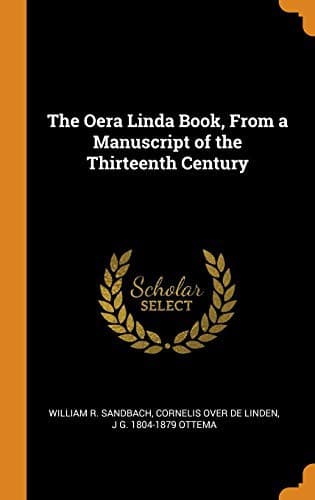
The Oera Linda Book, from a Manuscript of the Thirteenth Century
History
The Oera Linda Book, from a Manuscript of the Thirteenth Century
Frisian language -- Texts
Tha Tünis mith sinum skêpum to honk kêra wilde, gvng-i thet forma vppa
Dânnemarka of, men hi ne macht thêr navt ne landa, thåt hêde thju Moder
bisjowath. Ak et Flyland ne macht-er navt ne landa ånd forth nårne. Hi
skold alsa mith sinum ljvdum fon lek ånd brek omkomth håve, thêr vmbe
gvngon hja thes nachtis tha landa birâwa ånd fâra bi dêi. Alsa alinga
thêre kâd forth farande kêmon hja to thêre folkplanting Kâdik [33],
althus hêten vmbe that hjara have thrvch êne stênene kâdik formath
was. Hir selladon hja allerhanne liftochta, men Tutja thju burchfâm
nilde navt dâja that hja-ra selva nither setta. Thâ hja rêd wêron
krêjon hja twist. Tünis wilde thrvch thju strête fon tha middelsê
vmbe to fârane fâr tha rika kåning fon Egiptalandum, lik hi wel
êr dên hêde, men Inka sêide, that-i sin nocht hêde fon al et Findas
folk. Inka mênde that er byskin wel en hach dêl fon Atland by wysa fon
êland vrbilêwen skolde wêsa, thêr hi mith tha ljvdum frêthoch lêva
machte. As tha bêda nêva-t-althus navt ênes wrde koste, gvng Tünis
to ånd stek en râde fône in-t strând, ånd Inka êne blâwe. Thêr åfter
macht jahwêder kjasa, hwam ek folgja wilde, ånd wonder, by Inka thêr
en gryns hêde vmbe tha kåningar fon Findas folk to thjanja, hlipon
tha mâsta Finna ånd Mâgjara ovir. As hja nw thåt folk tellath ånd
tha skêpa thêr nêi dêlath hêde, tha skêdon tha flâta fon ekkorum;
fon nêf Tünis is åfternêi tâl kêmen, fon nêf Inka ninmer.
Nêf Tünis for allinggen thêre kâd al thrvch thju porte thêre
middelsê. Tha Atland svnken is, was-t-inna middelsê ra owera âk årg
to gvngen. Thêrthrvch wêron thêr fêlo månniska fon-t Findas land
nêi vsa hêinde ånd fêre Krêkalanda kvmen ånd âk fêlo fon Lyda-his
land. Thêr åjn wêron âk fêlo fon vs folk nêi Lydas land gvngon. Thåt
ella hêde wrocht, that tha hêinde ånd fêre Krêkalanda far thåt weld
hêre Moder vrlêren was. Thêr hêde Tünis vp rêkned. Thêrvmbe wilde
hi thêr en gode hâve kjasa ånd fon thêr ut fara rikka forsta fâra,
men thrvchdam sine flâte ånd sin folk sa wanhâven utsagon, mêndon tha
Kâdhêmer that hja râwera wêron, ånd thêrvmbe wrdon hja vral wêrath. Tha
to tha lesta kêmon hja an to Phonisivs kâd, that wêre 100 ånd 93 jêr
[34] nêi Âtland svnken is. Nêi bi thêre kâd fvndon hja en êland mith
twam diapa slinka, alsa-t as thrju êlanda utsach. Vppet midloste thêra
staldon hja hjara skula vp, åfternêi bvwadon hja thêr en burchwal
om to. As hja thêran nw en nôme jêva wilde, wrdon hja vnênes, svme
wild-et Fryasburch hêta, ôra Nêf tünia, men tha Mâgjara ånd tha Finna
bâdon thåt skolde Thyrhisburch [35] hête. Thyr [36] alsa hêton hja
ên hjarar drochtena ånd vppe tham-is jêrdêi wêron hja thêr land,
to wither-jeld wildon hja Tünis êvg as hjara kåning bikånne. Tünis
lêt im bilêsa ånd tha ôra nildon thêrvr nên orloch ne hâ. Thâ hja nw
god sâton, thâ sandon hja svme alde stjvrar ånd mâgjara ana wâl ånd
forthnêi thêre burch Sydon, men that forma nildon tha Kâdhêmar nawet
fon-ra nêta. Thv bist fêrhêmanda swårvar sêidon hja, thêr wi navt
hachta ne müge.
Public-domain text, read in full here on John Shaqi.
Reviews
Reviews
No reviews yet
Be the first to share your thoughts on this work.
Elsewhere in the archive
Join the Discussion
Join the discussion
Sign in to leave a comment or review.
Sign InorCreate an account