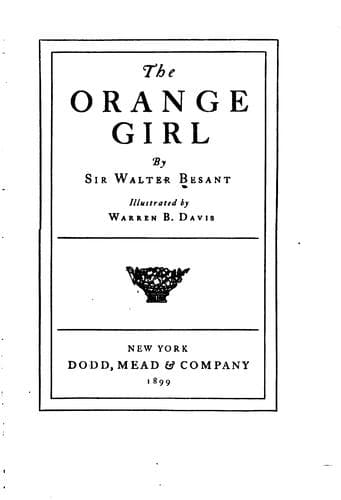
London (England) -- History -- 18th century -- Fiction
The manner in which the witness gave her evidence: the fire in her eyes
and in her cheeks: the dirty slovenly look of the woman: her uncombed
hair: her voice: her gestures: her manifest perjuries and
contradictions: disgusted all who looked on: the Judge laid down his pen
and leaned back in his chair as if what she said was of no concern: the
Aldermen looked at the Judge as much as to ask how long this was to be
permitted: the Jury whispered and shook their heads: the ladies present
knotted their brows and fanned themselves and whispered each other
angrily. At last she sat down flaming and vehement to the end. Her
evidence had in fact ruined the case. Why, she had the impudence to
allege that the property she had herself carried to the house was
received by Madame herself, who ordered her footmen to carry it to the
garrets.
She was followed by the shopkeepers who had been robbed. They swore to
certain goods of no great value, which had been stolen from them. Their
evidence was quickly given. There was, in fact, no evidence really
implicating the prisoner except that of the woman. There was clearly
something behind: something not explained, which everybody was
whispering to each other--it had been revealed in the famous paper
called 'The Case of Clarinda.' And now I understood what Jenny meant
when she said that her defence would bring her mother into the business.
For Counsel would have inquired into the Black Jack story and asked what
the things were doing there: how they came there: who was the landlord:
with many other particulars, some of which would have brought out the
truth. As for the woman, whether by feminine cunning or by accident, she
concealed the relationship between Jenny and the Black Jack: she had
really seen the sister and the mother carrying things to the house in
Soho Square: she did not then know that Madame Vallance was Jenny: she
found out the fact at the trial: she then invented the story of being
hired for carrying the property _because she knew it was there_. All
that the Court knew, however, was the fact that such a woman as stood
before them, this angel of loveliness this woman of position: had
actually confessed to the crime of receiving the miserable odds and
ends--the rags and tawdry finery--stolen from quite poor people. It was
amazing: it was incredible.
'That is my case, my Lord,' said the Counsel with a sigh, as if he was
ashamed of having conducted it at all.
'Prisoner at the Bar,' said the Judge, 'you have heard the verdict of
the Jury. You may now say anything you wish in explanation or
extenuation.'
'What can I have to say, my Lord,' she replied simply but with dignity,
'since I pleaded guilty? Nevertheless, I have to thank the Counsel for
the Prosecution, who almost proved my pleading impossible.'
The Judge summed up in a few words. The verdict of the Jury included a
recommendation to mercy.
Public-domain text, read in full here on John Shaqi.
Reviews
Reviews
No reviews yet
Be the first to share your thoughts on this work.
Elsewhere in the archive
Join the Discussion
Join the discussion
Sign in to leave a comment or review.
Sign InorCreate an account