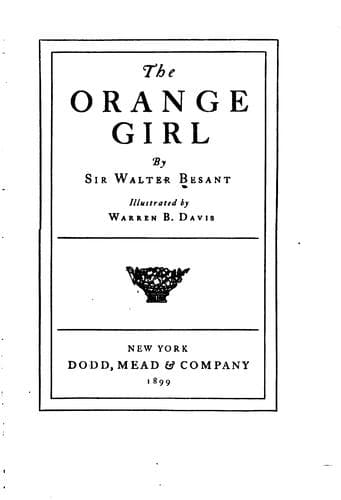
London (England) -- History -- 18th century -- Fiction
It was, indeed. They came back, their cheeks flushed, their eyes bright
with wine. Some of them too tipsy to stand, rolled upon the rout seats,
and so fell fast asleep.
I observed that the great ladies and the gentlemen with them did not
return after supper: their absence removed some restraint: and the
gentlemen who had arrived without a masquerade dress did not come back
after supper. The company was thinner, but it was much louder: there was
no longer any pretence of keeping up a character: the Quack left off
bawling his wares: the showman deserted his show: the fortune-tellers
left their tents: the Hermit left his cell: the dancing and tumbling
girls joined in the general throng: there were many sets formed but
little regular dancing: all were broken up by rushes of young men more
than half drunk: they caught the girls and kissed them--nothing loth,
though they shrieked: it was a proof that the gentlewomen had all gone,
that no one resented this rudeness--either a partner or the girl
herself: the scene became an orgy: all together were romping, touzling,
laughing, shrieking, and quarrelling.
Still the music kept up: still we played with unflinching arm and all
the spirit which can be put into them, the most stirring dance tunes. At
last they left off trying to dance: some of the women lay back on the
rout seats partly with liquor overcome and partly with fatigue: men were
sprawling unable to get up: bottles of wine were brought up from the
supper-room and handed round. The men grew every minute noisier: the
women shrieked louder and more shrilly--perhaps with cause. And every
minute some slipped away and the crowd grew thinner, till there were
left little more than a heap of drunken men and weary women.
At last word came up that it was five o'clock, the time for closing.
The conductor laid down his violin: the night's work was over: we would
go.
The people below clamoured for more music, but in vain. Then they, too,
began to stream out noisily.
As I passed the supper-room I saw that half a dozen young fellows had
got in and were noisily clamouring for champagne. The waiters who were
clearing the supper took no notice. Then one of them with a bludgeon set
to work and began to smash plates, glasses, dishes, bottles, windows, in
a kind of a frenzy of madness or mischief. Half a dozen stout fellows
rushed at him: carried him out of the supper-room and so into the Square
outside. It was a fitting end for the Masquerade.
While I was looking on, I was touched on the arm by a mask. I knew her
by her white satin dress for Madame.
I had seen her from time to time flitting about the room, sometimes with
a partner, sometimes alone. She was conversing one moment with a
gentleman whose star betokened his rank, and the next with one of her
paid actors or actresses, directing the sports. I had seen her dancing
two minuets in succession each with a grace and dignity which no other
woman in the room could equal.
Public-domain text, read in full here on John Shaqi.
Reviews
Reviews
No reviews yet
Be the first to share your thoughts on this work.
Elsewhere in the archive
Join the Discussion
Join the discussion
Sign in to leave a comment or review.
Sign InorCreate an account