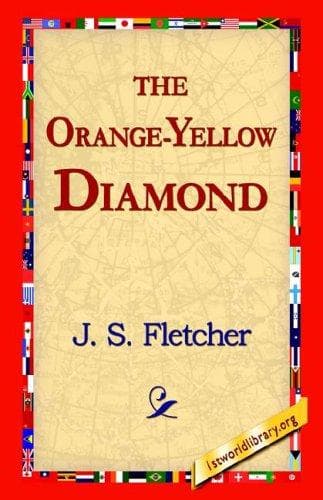
The Orange-Yellow DiamondFletcher, J. S. (Joseph Smith)
General
The Orange-Yellow Diamond
Fletcher, J. S. (Joseph Smith)
Detective and mystery stories; Diamonds -- Fiction; London (England) -- Fiction
"Secret!" exclaimed Dr. Mirandolet. "Aye--secret is the word.
Secret--yes! And--sure!"
"Is there anything else you can tell us?" asked the Coroner.
"Only this," replied the witness, after a pause. "It may be material.
As I bent over this man as he lay there on the pavement I detected a
certain curious aromatic odour about his clothes. It was strong at
first; it gradually wore off. But I directed the attention of the
policeman and Mr. Gardiner to it; it was still hanging about him, very
faintly, when we got him to the hospital: I drew attention to it there."
"It evidently struck you--that curious odour?" said the Coroner.
"Yes," answered Dr. Mirandolet. "It did. It reminded me of the East--I
have lived in the East--India, Burmah, China. It seemed to me that this
man had got hold of some Eastern scent, and possibly spilt some on his
clothes. The matter is worth noting. Because--I have heard--I cannot
say I have known--of men being poisoned in inhalation."
The Coroner made no remark--it was very evident from his manner that he
considered Dr. Mirandolet's evidence somewhat mystifying. And Dr.
Mirandolet stepped down--and in response to the official invitation Dr.
John Sperling-Lawson walked into the vacated witness-box.
"One of the greatest authorities on poisons living," whispered
Lauriston to Purdie, while Dr. Sperling-Lawson was taking the oath and
answering the formal questions. "He's principal pathologist at that
hospital they're talking about, and he constantly figures in cases of
this sort. He's employed by the Home Office too--it was he who gave
such important evidence in that Barnsbury murder case not so long
since--don't you remember it?"
Purdie did remember, and he looked at the famous expert with great
interest. There was, however, nothing at all remarkable about Dr.
Sperling-Lawson's appearance--he was a quiet, self-possessed,
plain-faced gentleman who might have been a barrister or a banker for
all that any one could tell to the contrary. He gave his evidence in a
matter-of-fact tone--strongly in contrast to Dr. Mirandolet's somewhat
excited answers--but Purdie noticed that the people in court listened
eagerly for every word.
He happened to be at the hospital, said Dr. Sperling-Lawson, when the
man Parslett was brought in, and he saw him die. He fully agreed with
Dr. Mirandolet that it was impossible to do anything to save the man's
life when he was brought to the hospital, and he was quite prepared to
say that the impossibility had existed from the moment in which
Gardiner had seen Parslett collapse. In other words, when Parslett did
collapse, death was on him.
"And--the cause of death?" asked the Coroner.
"Heart failure," replied the witness.
"Resulting from--what?" continued the Coroner.
Dr. Sperling-Lawson hesitated a moment--amidst a deep silence.
Public-domain text, read in full here on John Shaqi.
Reviews
Reviews
No reviews yet
Be the first to share your thoughts on this work.
Elsewhere in the archive
Join the Discussion
Join the discussion
Sign in to leave a comment or review.
Sign InorCreate an account