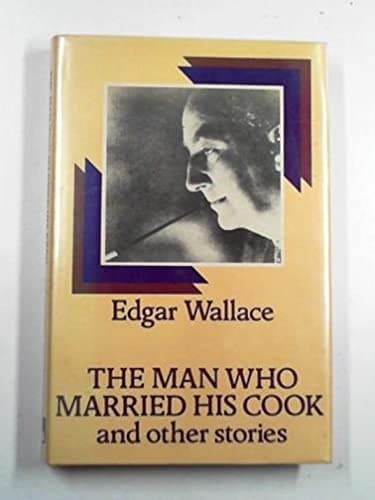
Detective and mystery stories; English fiction -- 20th century
Poltavo was silent a moment.
"No," he said finally, "I do not agree."
Baggin regarded him blackly.
"I see your point," he said, with biting emphasis. "With the
others"--he wet his dry lips--"you cast the black vote fast
enough----"
The count elevated his eyebrows. "Why refer to such things?" he
objected mildly. "If they be necessary--do them, swiftly and
well--but be silent, even as Nature is silent. For Mr. Grayson, he
is--how you say--a very sick man. Perhaps----" He shrugged his
shoulders and did not finish the sentence.
He bent down to the unconscious man.
"Lend a hand," he said quietly to Baggin.
The American obeyed, sullenly, and, between them, they half
supported, half carried Grayson to his cabin.
CHAPTER XXXIV
THE LAST OF THE NINE
To a calm sea, to a dawn all pearl and rose, the crew of the _Maria
Braganza_ woke. In the night, the speed of the warship had been
accelerated until she was moving at her top speed, and two columns of
black smoke belched from her great funnels. The two men who came on
deck at the same moment did not speak one to the other. Baggin was
pale; there were dark circles about his eyes; he looked like a man
who had not slept. But Count Poltavo was unperturbed.
Clear-eyed, shaven, not unusually pallid, he woke as from a pleasant
dream, and appeared on deck immaculate from point of shoe to
fingernail.
All the morning preparations were going on. Ammunition came up from
the magazine, dilatory quartermasters swung out guns; on the masthead
was an under-officer armed with a telescope.
He was the principal object of interest to the men on the
quarter-deck. Every few minutes their eyes would go sweeping aloft.
Beyond the curtest salutations, neither the captain, Baggin, nor the
calm Poltavo spoke. In Baggin's heart grew a new terror, and he
avoided the count.
The sun beat down on the stretch of awning that protected the
privileged three, but, for some reason, Baggin did not feel the heat.
He had a something on his mind; a question to ask; and at last he
summoned his resolution to put it. He walked over to where the count
sat reading.
"Ivan," he said--he had never so addressed him before--"is the end
near?"
The count had raised his clear eyes when the other had come toward
him; he smiled.
"Which variety of end?" he asked.
"There is only one variety," said Baggin steadily. "There is only
one thing in the world that counts, and that is life."
"Not money?" asked the Russian, with a faint, ironical smile.
"Not money," repeated Baggin. "Least of all, money--but life!"
Poltavo arose. He had seen the flutter of a white skirt at the far
end of the promenade-deck.
"Life," he said, with soft deliberateness, "is the least of all
gifts, my friend. It is of no more consequence than the crystal of
snow which is lost in the foul mud beneath our feet, or the drop of
dew which is burned up by the ardent rays of the sun." He turned
upon his heel.
Public-domain text, read in full here on John Shaqi.
Reviews
Reviews
No reviews yet
Be the first to share your thoughts on this work.
Elsewhere in the archive
Join the Discussion
Join the discussion
Sign in to leave a comment or review.
Sign InorCreate an account