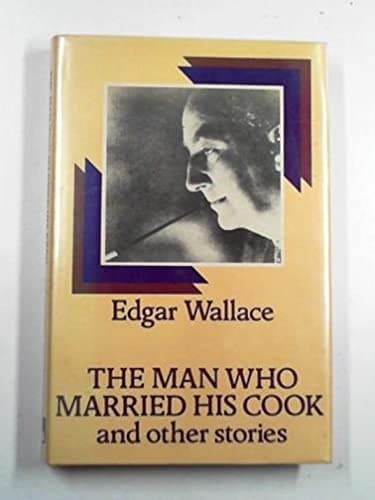
Detective and mystery stories; English fiction -- 20th century
"'A lie that is half the truth,'" quoted T. B. solemnly.
"But it is true--there is some connection between the murders and the
slump, and, I say, do your people know anything about the mysterious
disappearance of that dancing girl from the Philharmonic?"
"Oh, child of sin!" T. B. shook his head reprovingly. "Oh,
collector of romance!"
"One last question," said the reporter. "Do you know a man named
Escoltier?"
"Not," said T. B. flippantly, "from a crow--why? is he suspected of
abducting your dancing lady?"
"No," said the reporter, "he's suspected of pulling our editor's leg."
T. B. was all this time walking away from the court, and the reporter
kept step with him.
"And what is the nature of his hoax?" demanded T. B.
He was not anxious for information, but he was very desirous of
talking about nothing--it had been a trying day for him.
"Oh, the usual thing; wants to tell us the greatest crime that ever
happened--a great London crime that the police have not discovered."
"Dear me!" said T. B. politely, "wants payment in advance?"
"No; that's the curious thing about it," said the reporter. "All he
wants is protection."
T. B. stopped dead and faced the young man. He dropped the air of
boredom right away.
"Protection?" he said quickly, "from whom?"
"That is just what he doesn't say--in fact, he's rather vague on that
point--why don't you go up and see Delawn, the editor?"
T. B. thought a moment.
"Yes," he nodded. "That is an idea. I will go at once."
In the holy of holies, the inner room within the inner room, wherein
the editor of the London Morning Journal saw those visitors who were
privileged to pass the outer portal, T. B. Smith sat, a sorely
puzzled man, a scrap of disfigured paper in his hands.
He read it again and looked up at the editor.
"This might of course be a fake," he said.
"It doesn't read like a fake," said the other.
"Admitting your authority on the subject of fakes, Tom," said T.
B.,--they were members of the same club, which fact in itself is a
license for rudeness,--"I am still in the dark. Why does this--what
is his name?"
"Escoltier."
"Why does this man Escoltier write to a newspaper, instead of coming
straight to the police?"
"Because he is a Frenchman, I should imagine," said the editor. "The
French have the newspaper instinct more highly developed than the
English."
T. B. looked at his watch.
"Will he come, do you think?"
"I have wired to him," said the editor.
T. B. read the paper again. It was written in execrable English, but
its purport was clear.
The writer could solve the mystery of Hyatt's death, and for the
matter of that of the Moss murder.
T. B. read it and shook his head.
"This sort of thing is fairly common," he said; "there never was a
bad murder yet, but what the Yard received solutions by the score."
A little bell tinkled on the editor's desk, and he took up the
receiver of the telephone.
"Yes?" he said, and listened. Then, "Send him up."
"Is it----"
Public-domain text, read in full here on John Shaqi.
Reviews
Reviews
No reviews yet
Be the first to share your thoughts on this work.
Elsewhere in the archive
Join the Discussion
Join the discussion
Sign in to leave a comment or review.
Sign InorCreate an account