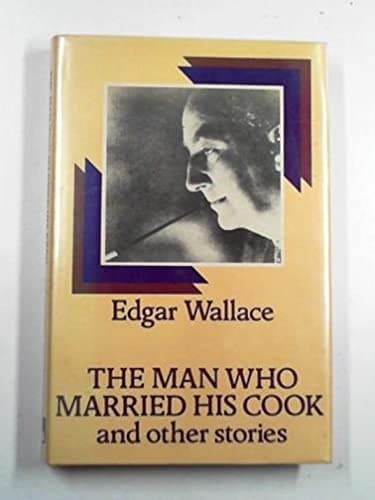
Detective and mystery stories; English fiction -- 20th century
A drunken sailor, obviously of foreign extraction, was ejected,
fighting, from a small public-house in the Edgware Road. He rose
from the ground slowly, and stood apparently debating in his mind
whether he should go away quietly or whether he should return to the
attack. It is not too much to say that had he decided upon the
pacific course, the mystery of the whereabouts of the Nine Bears
might never have been elucidated. In that two seconds of
deliberation hung the fates of Baggin and his confederates, and the
reputation of Scotland Yard.
The foreign sailor made up his mind. Back to the swing-doors of the
tavern he staggered, pushed them open, and entered.
A few minutes later a police-whistle blew, and a commonplace
constable strolled leisurely to the scene of the disturbance and took
into custody the pugnacious foreigner on a charge of "drunk and
disorderly."
This was the beginning of the final fight with the "Bears," a fight
which cost Europe over a million of money and many lives, but which
closed forever the account of the Nine Bears of Cadiz.
"Here is a case that will amuse you, T. B.," said the Chief,
strolling into his bureau; "a man, giving the name of Silva, who has
been taken to the police-station on the prosaic charge of 'D. and
D.,' is found to be a walking cash deposit. Twelve hundred pounds in
Bank of England notes and 26,000 francs in French money was found in
his possession. He speaks little or no English, has the appearance
of being a sailor--will you go down and see what you can make of him?"
In a quarter of an hour the Assistant-Commissioner was at the
police-station.
"Yes, sir," said the station sergeant, "he's quiet now. I don't
think he's so very drunk, only pugilistically so."
"What do you make of him?"
"He's a sailor; a deserter from some foreign navy, I should say. He
has underclothes of a uniform type, and there's a sort of device on
his singlet--three stars and a number."
"Brazilian Navy," said T. B. with promptness. "Talkative?"
The sergeant smiled.
"In his own language, very," he said drily. "When I searched him, he
said a great number of things which were probably very rude."
T. B. nodded.
"I'll see him," he said.
A gaoler led him down a long corridor.
On either side were long stone-painted doors, each with a little
steel wicket.
Stopping before one door, he inserted his bright key in the lock,
snapped back a polished bolt, and the door swung open.
A man who was sitting on a wooden bench with his head in his hands,
jumped to his feet as the Assistant-Commissioner entered, and poured
forth a volume of language.
"Softly, softly," said T. B. "You speak French, my friend."
"Oui, monsieur," said the man. "Though I am Spanish."
"You are a deserter from a Brazilian warship," said T. B.
The man stared at him defiantly.
"Is not that so, friend?"
The prisoner shrugged his shoulders.
"I should like to smoke," was all that he said.
Public-domain text, read in full here on John Shaqi.
Reviews
Reviews
No reviews yet
Be the first to share your thoughts on this work.
Elsewhere in the archive
Join the Discussion
Join the discussion
Sign in to leave a comment or review.
Sign InorCreate an account