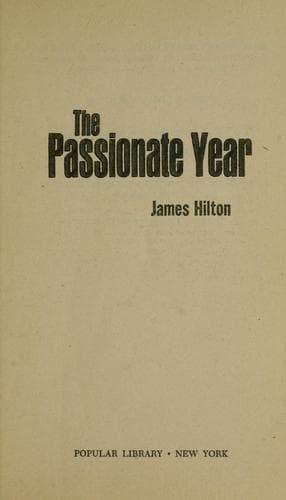
England -- Fiction; Marriage -- Fiction; Teachers -- Fiction
Through the fast gathering twilight they went their several ways. When
he reached Parminters it was quite dark. He went to the _Green Man_ and
had tea in the cosy little firelit inn-parlour with a huge Airedale dog
for company. Somehow, he felt happier, now that he knew the truth and
was facing it. And by the time he reached Lavery's on the way home he
was treating the affair almost jauntily. After all, there was a very
simple and certain cure for even the most serious attack of the ailment
which he had diagnosed himself as possessing. He must not see Clare
again. Never again. No, not even once. How seriously he was taking
himself, he thought. Then he laughed, and wondered how he had been so
absurd. For it was absurd, incredibly absurd, to suppose himself even
remotely in love with Clare! It was unthinkable, impossible, no more to
be feared than the collapse of the top storey of Lavery's into the
basement. He was a fool, a stupid, self-analysing, self-suspecting fool.
He entered Lavery's scorning himself very thoroughly, as much for his
cowardly decision not to see Clare again as for his baseless suspicion
that he was growing fond of her.
CHAPTER THREE
I
Why was it that whenever he had had any painful scene with Helen the
yearning came over him to go and visit Clare, not to complain or to
confess or to ask advice, but merely to talk on the most ordinary topics
in the world? It was as if Helen drew out of him all the strength and
vitality he possessed, leaving him debilitated, and that he craved the
renewal of himself that came from Clare and from Clare alone.
The painful scenes came oftener now. They were not quarrels; they were
worse; they were strange, aching, devitalising dialogues in which Helen
cried passionately and worked herself into a state of nervous emotion
that dragged Speed against his will into the hopeless vortex. Often when
he was tired after the day's work the mere fervour of her passion would
kindle in him some poignant emotion, some wrung-out pity, that was, as
it were, the last shred of his soul; when he had burned that to please
her he was nothing but dry ashes, desiring only tranquillity. But her
emotional resources seemed inexhaustible. And when she had scorched up
the last combustible fragment of him there was nothing left for him to
do but to act a part.
When he realised that he was acting he realised also that he had been
acting for a long while; indeed, that he could not remember when he had
begun to act. Somehow, she lured him to it; made insatiable demands upon
him that could not be satisfied without it. His acting had become almost
a real part of him; he caught himself saying and doing things which came
quite spontaneously, even though they were false. The trait of artistry
in him made him not merely an actor but an accomplished actor; but the
strain of it was immense. And sometimes, when he was alone, he wished
that he might some time break under it, so that she might find out the
utmost truth.
Public-domain text, read in full here on John Shaqi.
Reviews
Reviews
No reviews yet
Be the first to share your thoughts on this work.
Elsewhere in the archive
Join the Discussion
Join the discussion
Sign in to leave a comment or review.
Sign InorCreate an account