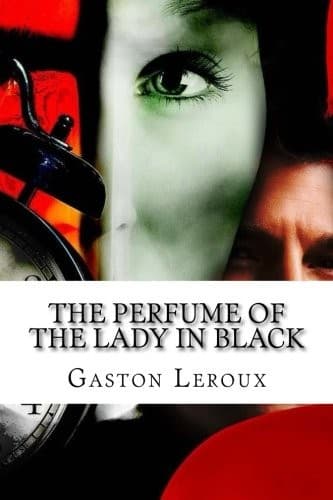
Detective and mystery stories; Rouletabille, Joseph (Fictitious character) -- Fiction
The first stroke of the luncheon bell sounded: I hurried to my room
to bathe my hands and face and make a hasty toilet and I mounted the
steps of “la Louve” rapidly fearing that I should be late; but I paused
in the vestibule, amazed to hear the sound of music. Who, under the
present circumstances, cared or dared to play a piano in the Fort of
Hercules? And, hark! Someone was singing. It was a voice at once soft
and sonorous singing a strange song which sounded now plaintive, now
threatening! I know the song now by heart; I have often heard it since.
Ah, reader, you, too, know it well, perhaps, if you have ever passed
the frontiers of chill Lithuania, if you have ever entered the vast
empires of the North. It is the song of the virgins who surround the
traveller as he sails and destroy him without pity; it is the song that
Sienkiewicz, one immortal day, made for Michel Vereszezaka. Listen.
“_If you approach the Swiss lakes at the hour of nightfall, the face
turned toward the lake, the stars above your head, the stars beneath
your feet, and two moons shining before your eyes--you shall see this
plant that caresses the bank--the wives and daughters of the Swiss
whom God has changed into flowers. They balance their forms above the
abyss, their heads white like the moths; their leaves are green as the
needle of the maize tipped with gold._
“_Images of innocence during life, they have kept their virginal
robe after death; they live in the shadow and no blemish comes near
them; mortal hands dare not touch them._
“_The Tsar and his guard one day made the attempt when, after having
gathered the beautiful flowers, they wished to wreath their brows and
adorn their swords with them._
“_All those who had gathered the blossoms were smitten with great
ill or struck with sudden death._
“_When time would have effaced these things from the memory of the
people, the memory of the punishment is preserved, and in perpetuating
it, the flowers are still called the doom of the Tsars._
“_Thus saying the lady of the lake departed slowly; the lake opened
for her the most profound of its depths; but the eye seeks in vain for
the fair unknown whose face was born out of the mist and whose voice
the traveller never heard again._”
These were the words, translated into our language, of the song which
was sung by the soft yet resonant voice while the piano played a weird
accompaniment. I opened the door and found myself face to face with a
young man who was standing. I heard the footsteps of Mme. Rance behind
me and the next moment she was introducing me to Prince Galitch.
Public-domain text, read in full here on John Shaqi.
Reviews
Reviews
No reviews yet
Be the first to share your thoughts on this work.
Elsewhere in the archive
Join the Discussion
Join the discussion
Sign in to leave a comment or review.
Sign InorCreate an account