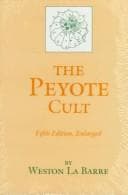
Indians of North America -- Religion; Indians of North America -- Rites and ceremonies; Peyotism
[74] Seymour, _Peyote Worship_, 184; Petrullo, _The Diabolic Root_,
71-72; Shonle, _Peyote; The Giver of Visions_, 55.
APPENDIX 1: PEYOTE IN MEXICO
The connotative etymological implications of the term “peyotl” become
valuable when an understanding of its wider denotative applications is
sought. In Hernandez’ original description, _Lophophora williamsii_ is
called “Peyotl Zacatensi, seu radice molli et lanuginosa”[1]—that is to
say, the whitish flocculence which gains the plant both its Aztec and
modern botanical names, is again pointed out in Hernandez’ Latin synonym,
“soft and lanuginous root.”
But Hernandez distinguished two peyotes, “Peyotl Zacatensi” and “Peyotl
Xochimilcensi,”[2] the latter not even one of the Cactaceae, and one
wonders at the classification until the plant is botanically described:
This peyote, a rather excellent medicine, has a heavy round
root covered with woolly rootlets, in addition to other roots
which resemble acorns, because of their form and size, growing
out in every direction.... It has few stems ... with yellow
flowers at their extremities.
From even this brief characterization it is clear that the term
“peyotl” was extended to this non-cactus (later identified as _Cacalia
diversifolia_ or _C. cordifolia_)[3] because of its balanoid lanuginous
roots. The latter species is sold in the drug markets around Guadalajara,
Jalisco, as “peyote”; specimens from Alvarez, San Luis Potosí, locally
known as “cachan,” are valued as an aphrodisiac and remedy for sterility,
the rhizic-orchic pubescence of the plant being evidently viewed in terms
of sympathetic magic.
Dr. Alfonso[4] applies the term peyote or piote further to _Cacalia
sinuata_, La Llave, and _Etchevarria coespitosa_ Dec., the former
Compositae, the latter one of the Crassulaceae. One of the Compositae,
_Senecio_ spp., ranging from Cerro del Pino to the Valley of Mexico is
thus described:
The tap-root is tuberous-ovoid, size of a small hen’s egg, a
little curved above, carrying almost all [its bulk] in the
heavy extremity.... All the surface is covered with a nap
formed of long matted hairs of the color of cannel, and a
number of long roots.
The “Peyote of Tepic”[5] (_Senecio hartwegii_) is smaller and more
globular than the above, and contains no alkaloid, the gluey, sticky
sap having no effect on the dove or the rat. The “Peyote of Querétaro”
(_Echinocactus turbinatus_ Henning), said to be distinguished from
_Anhalonium_ only by the spiral disposition of the hair-pencils, is a
common form of _Lophophora williamsii_.
Public-domain text, read in full here on John Shaqi.
Reviews
Reviews
No reviews yet
Be the first to share your thoughts on this work.
Elsewhere in the archive
Join the Discussion
Join the discussion
Sign in to leave a comment or review.
Sign InorCreate an account