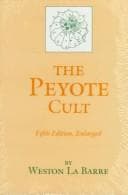
Indians of North America -- Religion; Indians of North America -- Rites and ceremonies; Peyotism
[6] Schultes, _Peyotes and Plants Used_, 135. The Reko etymology
preferred by Schultes (p. 136) so far as botanical evidence goes
derives peyotl from Aztec pi- (small) and -yautli or -yolli (herb with
narcotic odor or action), making “peyotillo” a double diminutive.
Schultes has accepted, at the instance of the present writer, the thesis
that _Cacalia_ spp. might well enough fit the “velvety, cocoon-like”
etymology, but argues nevertheless that “this etymology does not seem to
explain the application of the same name to the great array of plants
which possess no soft or silky parts whatsoever.” Schultes is undoubtedly
right on this point in terms of descriptive botany; yet may not some
items be included in our lists illegitimately? _Anhalonium prismaticum_
Lem., for example, is called hikuli, not peyote, and is only partly its
terminological equivalent. And does the “little narcotic” etymology
explain all these instances?
[7] Urbina, in Harms, _Über das Narkotikum_, 31; Schultes, _op. cit._,
135.
APPENDIX 2: PEYOTE AND THE MESCAL BEAN
Far the commonest designation for peyote in the older literature is
“mescal bean,” a curiously persistent misusage, since either in the dried
or the green state _Lophophora williamsii_ resembles a bean even less
than a mushroom, Safford’s teo-nanacatl. On probing more deeply into this
confusion, a widespread pre-peyote narcotic cult of the southern Plains
was discovered. The ethnographic results of this study are presented in
the text, but a brief characterization of the “mescal bean” proper is
essential as well.
Collected specimens of the old Plains “red bean” (= mescal bean proper)
have been identified by authorities at the Harvard Botanical Museum
as _Sophora secundiflora_ (Ortega) Lag. ex DC.[1] Variously known as
“mescal bean” (southern Plains), “colorín” (Coahuila, Nuevo León, Texas),
“frijolillo” (Nuevo León, Texas), “frijolito” (Texas), “evergreen
coral-bean,” “coral-bean” and “mountain laurel” (southern New Mexico),
this plant grows from Coahuila to San Luis Potosí, western Texas and
southern New Mexico, being specially characteristic of the dry limestone
hills. It is not, however, the “mountain laurel” _Kalmia latifolia_,
being a true member of the Fabaceae or Bean Family; the term “coral-bean”
is likewise applied to two other legumes of Texas, both, however,
_Erythrina_ spp., not _Sophora_.[2]
Public-domain text, read in full here on John Shaqi.
Reviews
Reviews
No reviews yet
Be the first to share your thoughts on this work.
Elsewhere in the archive
Join the Discussion
Join the discussion
Sign in to leave a comment or review.
Sign InorCreate an account