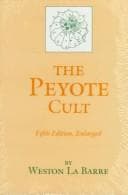
Indians of North America -- Religion; Indians of North America -- Rites and ceremonies; Peyotism
[An ethnographer] reports that in the Peyote Cults investigated
there is no actual, implied or even symbolic eroticism[23]
which marks these ceremonies off from practically every other
known American Indian ceremony of any tribe or group [!]. In
order to test the validity of some of these reports, nine
mature members of the faculty ... submitted together to extreme
peyote intoxication.[24] [The experiment was performed in a
group _because_ it] gave the opportunity for suggestion of
one observer upon another [and permitted a ceremony complete
with rattles and drum. Consequently[25]] one unexpected and
unforeseen result of this investigation is the evident strongly
anti-aphrodisiac[26] effect of the drug. This would again
explain, for social psychology and for anthropology, the
purely and totally unerotic character[27] of the ceremonies of
the Peyote Cults so unusual to American Indian ceremonies.[28]
It seems alike profitless to enter into a discussion of those who argue
the aphrodisiac properties of peyote.[29] These have often enough
been missionaries and administrators whose use of the argument in
bitter attacks on the Native American Church shows them to be scarcely
disinterested. Certainly from the evidence so far at hand we can only
heartily endorse the opinion of Klüver[30] that “the drug apparently does
not influence the sexual sphere in any specific way.”
THERAPEUTIC USES OF PEYOTE
From the physiological relation of the peyote alkaloids to strychnine
and morphine, considerable enthusiasm was early shown about their
pharmacodynamics and possible therapeutic uses. Jolly[31] in 1896
experimented on pellotine [= peyotline] as a hypnotic and soporific,
for when used in small doses in man the fall of the pulse initially
is accompanied by sleepiness. Heffter[32] likewise reports a marked
heaviness of limbs and eyelids. Loaeza,[33] apparently using pan-peyotl
preparations, maintained that peyote and _Cereus serpentinus_ (organillo)
had value as tonics or cardiac regulators, but variable action and
individual idiosyncrasy is marked. Henry[34] says the therapeutic dose
of pellotine is one-third to two-thirds of a grain, but that it is only
“slightly narcotic.” The high toxicity of lophophorine discourages its
therapeutic use. Rouhier[35] wrote in 1926 that “properly speaking,
therapeusis by peyote does not yet exist. Although the drug was
introduced in the American pharmaceutical market[36] for twenty years,
from which it has since disappeared, it is still unknown to the great
medical public.” On the whole, however, the therapeutic possibilities of
_Lophophora_ seem unimpressive.[37]
USES IN PSYCHIATRY
Public-domain text, read in full here on John Shaqi.
Reviews
Reviews
No reviews yet
Be the first to share your thoughts on this work.
Elsewhere in the archive
Join the Discussion
Join the discussion
Sign in to leave a comment or review.
Sign InorCreate an account