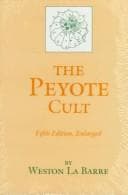
Indians of North America -- Religion; Indians of North America -- Rites and ceremonies; Peyotism
[6] Which is of course mere theory; actually there is considerable
unconscious syncretism, and Belo himself frequently refers to Jesus in
his prayers.
[7] _Report on the case_, in Safford, _Aztec Narcotic_, 306. “Twelve
years ago the Otoes brought the new religion to the Winnebagoes and
Omahas of Nebraska.... In talking with Albert Hensley, one of the
prominent leaders, he said, ‘The mescal was formerly used improperly, but
since it has been used in connection with the Bible it is proving a great
benefit to the Indians. Now we call our church the Union Church instead
of Mescal-eaters’” (Letter, April 15, 1909 in Blair, _The Indian Tribes_,
282.)
[8] From articles of incorporation kindly lent me by James Waldo (Kiowa).
The original paper was lost by Mooney in Washington; Kiowa Charley’s copy
gives the date Oct. 29, 1919—probably a duplicate reissue. Other data
from Murdock and Wilson.
[9] From 1918 to 1936 the officials have been (president, vice-president
and treasurer, respectively): Frank Eagle (Ponca), Mack Haag (Cheyenne),
Calumet, Louis MacDonald (Ponca), Ponca City; Mack Haag, Delos Lonewolf
(Kiowa), Carnegie, James Waldo (Kiowa), Verden; Delos Lonewolf, Alfred
Wilson (Cheyenne), Thomas, James Waldo; Alfred Wilson, Ned Brace (Kiowa),
Mountain View, Oscar Whyel (Kickapoo); Alfred Wilson, Ned Brace, Louis
Toyebo (Kiowa); Ned Brace, Frank Cayou (Omaha), Edgar McCarthy (Osage);
Frank Cayou, Alfred Wilson, Edgar McCarthy. George Pipestem (Oto) of Red
Rock was the secretary of the Native American Church from its founding
until his death in 1936.
[10] Letter of C. C. Guinn of Guinn & Maddox, Attorneys, to Mack Haag,
President of the Native American Church, dated Hardin, Montana, Feb. 16,
1916; Densmore, _The Peyote Cult_.
[11] Elections of officials are held yearly in Nebraska instead of every
two years as in Oklahoma.
[12] Condensed from Mrs. M. G. Smith’s article, _A Negro Peyote Cult_.
Mrs. Smith does not mention any possible Oto influence, which, in view of
the near-identity of the name appears probable.
[13] This occurs in no Indian peyote ceremony known to the writer. This
deliberate destructive act suggests a symbolic aggression. The psychic
mechanisms underlying this behavior have been shown with fine perception
in John Dollard’s penetrating book _Caste and Class in a Southern Town_.
[14] This again suggests Oto influence.
[15] Cf. the related emetic rites!
[16] Reko, _Ein Kultus die Gespenster_, 431: “Die Christian Peyotl Church
in South Dakota benutzt diese Dinger an Stelle der Hostie und verabreicht
sie bei der Kommunion and die Glaübigen. Daneber haben sie jenseits der
Grenze noch eine nicht unbedeutende Kunschaft in der nordamerikanischen
Indianer und den Schwarzen die die Mescalbottons [sic] freilich
keineswegs zum Kommunizieren benützen.”
BIBLIOGRAPHY
ADAIR, JAMES. _The History of the American Indians_ (London, 1775).
Public-domain text, read in full here on John Shaqi.
Reviews
Reviews
No reviews yet
Be the first to share your thoughts on this work.
Elsewhere in the archive
Join the Discussion
Join the discussion
Sign in to leave a comment or review.
Sign InorCreate an account