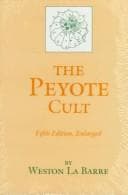
Indians of North America -- Religion; Indians of North America -- Rites and ceremonies; Peyotism
Common elements are numerous: the ceremonial trip for peyote (more
elaborate in Mexico, to be sure), the meeting held at night, the fetish
peyote, the use of feathers and the abundance of symbolisms connected
with birds, the ritual circuit, ceremonial fire and incensing, water
ceremonies, the “Peyote Woman,” morning “baptism” or “curing” rites,
“talking” peyote, abstinence from salt, ritual breakfast, singing,
tobacco ceremonials, public confession of sins, Morning Star symbolisms,
and (for northern Mexico) the crescent moon[127] altar. The fear of
being blinded by the peyote-fuzz is Mescalero, Lipan and Plains, and the
water-drum is shared by both non-peyote Southwestern groups and those of
the Plains who have the peyote rite. The use of parched corn in sugar
water, boneless, sweetened meat and fruit for the “peyote breakfast” may
be regarded as universal for peyotism, wherever found.
FOOTNOTES:
[1] Rouhier (_Monographie_, 91, n. 1) argues immense antiquity
for peyotism, _circa_ 300 years B.C., among the Chichimeca on
quasi-historical grounds. Our knowledge of peyote from Spanish documents
goes back to the sixteenth century in Mexico. A manuscript in the
Library of Congress reports the trial of a Taos Indian, February 3-8,
1719, for having “taken peyote and disturbed the town” (cf. Twitchell,
_Spanish Archives_, 2:188). See Bandelier, _Manuscript_; Mooney,
_Tarumari-Guayachic_.
[2] Adapted from Lewin, _Phantastica_, 96, and Nicolás de León in
Brinton, _Nagualism_, 6.
[3] Hernandez, _De Historia Plantarum_, 3:70.
[4] Arlegui, _Crónica_, 2:154-55 in Urbina, _El Peyote y el Ololiuhqui_,
26.
[5] Prieto, _Historia y Estadistica_, 123-24, in Mooney, _Peyote
Notebook_.
[6] Alarcón, _Tratado de los supersticiones_, 195.
[7] Lindquist, _The Red Man_, 70-71, is in error in stating that the Zuñi
use peyote for religious purposes; moreover the document of 1720 cited
refers to Taos, not Zuñi. Mr. An-che Li assures me that the Zuñi lack
peyote even today. Lindquist has evidently confused peyote with datura;
see for example Safford, _Narcotic Plants_, 405, 406. Still other plants,
e.g., datura, cohoba snuff, coca, yahé, aya-huasca, etc., were used in
Middle America as prophetic aids; see for example Safford, _op. cit._,
393; Gayton, _Narcotic Plant Datura_.
Public-domain text, read in full here on John Shaqi.
Reviews
Reviews
No reviews yet
Be the first to share your thoughts on this work.
Join the Discussion
Join the discussion
Sign in to leave a comment or review.
Sign InorCreate an account