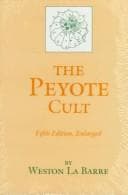
Indians of North America -- Religion; Indians of North America -- Rites and ceremonies; Peyotism
[52] Beals, _Comparative Ethnology_, 131. He adds, though, that “This
[use] may also be aboriginal, and very probably dates back to the
separation of the Huichol from their peyote-using relatives, the
Guachachiles.” He cites Thomas and Swanton (_Indian Languages_, 22) but
evidence is meagre. For the Cora we have Ortega (in Safford, _An Aztec
Narcotic_, 295, and _Narcotic Plants_, 402): “Close to the musician was
seated the leader of the singing whose business it was to mark the time.
Each of these had his assistants to take his place when he should become
fatigued.... They began forming as large a circle as could occupy the
space of ground that had been swept off for this purpose. One after the
other went dancing in a ring or marking time with their feet, keeping
in the middle the musician and the choirmaster whom they invited, and
singing in the same unmusical tone that he set them. They would dance all
night from five o’clock in the evening to seven o’clock in the morning,
without stopping or leaving the circle. When the dance was ended all
stood who could hold themselves on their feet; for the majority from the
peyote and the wine which they drank were unable to utilize their legs or
hold themselves upright.”
[53] Prieto, _Historia y Estadistica_, 123-24.
[54] Beals, _Comparative Ethnology_, 131.
[55] Sahagún, _Historia general_, 3:241 (Chichimeca); Prieto, _Historia
y Estadistica_, 119-20, cites a Maratine Indian (Tamaulipecan) peyote
song referring to war. Arlegui, in Urbina, _El Peyote y el Ololiuhqui_,
26; see also Rouhier, _op. cit._, 12, note 3, 96, 331, note 3; Alegre, in
Urbina, _op. cit._, 26; Preuss, _Die Nayarit-Expedition_, 39. The Morning
Star is the principal Cora god (Lumholtz, _Unknown Mexico_, 1:511, see
also _Handbook of the American Indians_, 1:348a). Elder Brother among
the Huichol is the god of wind and hikuli (Lumholtz, _Symbolism of
the Huichol_, 42). The Tarahumari dance yumari for the Morning Star
(Lumholtz, _Unknown Mexico_, 1:344). In the Plains the drum-lacing
signifies the Morning Star. Spier (_Yuman Tribes_, 165) writes: “[The
battle leader’s] song first described the morning star, ‘big star,’
which in some unidentified way is connected with war. Just what was his
function in battle was not ascertained.” He also dreamed he saw cacti
fighting like men.
[56] Mooney, _Tarumari-Guayachic_; Sahagún, _Historia general_, 3:118;
Ortega, _Historia del Nayarit_, 22-23; Lumholtz, _Unknown Mexico_,
1:367-68, 2:274-75; Prieto, _Historia y Estadistica_, 123-24.
[57] Racing (Tarahumari, Huichol, Tamaulipas, Acaxee): Lumholtz, _Unknown
Mexico_, 1:284-85, 2:49-50; Prieto, _Historia y Estadistica_, 123-24;
Beals, _The Acaxee_, 8.
[58] Beals (_Comparative Ethnology_, 127, 141, 211-12) lists it for
Southern Mexico, Jalisco-Tepic, Southwest.
Public-domain text, read in full here on John Shaqi.
Reviews
Reviews
No reviews yet
Be the first to share your thoughts on this work.
Elsewhere in the archive
Join the Discussion
Join the discussion
Sign in to leave a comment or review.
Sign InorCreate an account