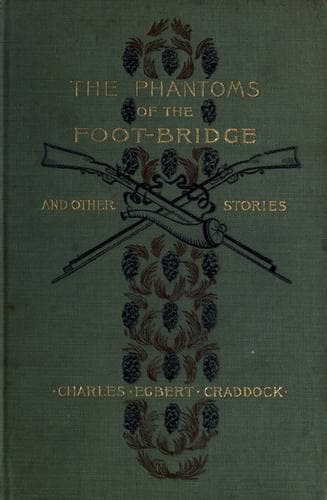
The Phantoms of the Foot-Bridge, and Other StoriesCraddock, Charles Egbert
General
The Phantoms of the Foot-Bridge, and Other Stories
Craddock, Charles Egbert
Cumberland Mountains -- Fiction; Mountain life -- Fiction; Tennessee -- Social life and customs -- Fiction
This alien glow it was thought had betrayed the place to the raiders,
and Nehemiah's instrumentality was never discovered. The post-office
appointment was bestowed upon his rival for the position, and it was
thought somewhat strange that he should endure the defeat with such
exemplary resignation. No one seemed to connect his candidacy with his
bootless search for his nephew. When Leander chanced to be mentioned,
however, he observed with some rancor that he reckoned it was just as
well he didn't come up with Lee-yander; there was generally mighty
little good in a runaway boy, and Lee-yander had the name of being
disobejent an' turr'ble bad.
Leander found a warm welcome at home. His violin had been broken in the
_mêlée_, and the miller, though ardently urged, never could remember the
spot where he had hidden the book--such havoc had the confusion of that
momentous night wrought in his mental processes. Therefore, unhampered
by music or literature, Leander addressed himself to the plough-handles,
and together that season he and "Neighbor" made the best crop of their
lives.
Laurelia sighed for the violin and Leander's music, though, as she
always made haste to say, some pious people misdoubted whether it were
not a sinful pastime. On such occasions it went hard with Leander not to
divulge his late experiences and the connection of the pious Uncle
Nehemiah therewith. But he always remembered in time Laurelia's
disability to receive confidences, being a woman, and consequently
unable to keep a secret, and he desisted.
One day, however, when he and Ty Sudley, ploughing the corn, now
knee-high, were pausing to rest in the turn-row, a few furrows apart, in
an ebullition of filial feeling he told all that had befallen him in
his absence. Ty Sudley, divided between wrath toward Nehemiah and
quaking anxiety for the dangers that Leander had been constrained to
run--_ex post facto_ tremors, but none the less acute--felt moved now
and then to complacence in his prodigy.
"So 'twar _you-uns_ ez war smart enough ter slam the furnace door an'
throw the whole place inter darkness! That saved them moonshiners and
raiders from killin' each other. It saved a deal o' bloodshed--ez sure
ez shootin'. 'Twar mighty smart in ye. But"--suddenly bethinking himself
of sundry unfilial gibes at Uncle Nehemiah and the facetious account of
his plight--"Lee-yander, ye mustn't be so turr'ble bad, sonny; ye
_mustn't_ be so _turr'ble_ bad."
"Naw, ma'am, Neighbor, I won't," Leander protested.
And he went on following the plough down the furrow and singing loud and
clear.
THE RIDDLE OF THE ROCKS
Public-domain text, read in full here on John Shaqi.
Reviews
Reviews
No reviews yet
Be the first to share your thoughts on this work.
Elsewhere in the archive
Join the Discussion
Join the discussion
Sign in to leave a comment or review.
Sign InorCreate an account