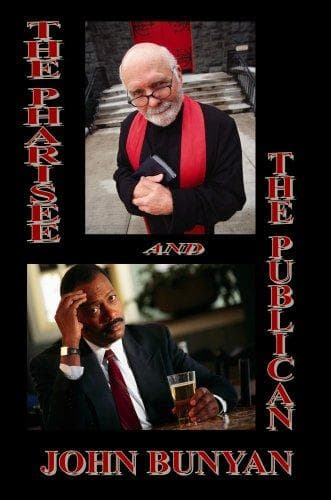
Pharisee and the publican (Parable) -- Early works to 1800
I have often observed, that which is natural and so comely in one, looks
odiously when imitated by another. I speak as to gestures and actions in
preaching and prayer. Many, I doubt not, but will imitate the Publican,
and that both in the prayer and gestures of the Publican, whose persons
and actions will yet stink in the nostrils of him that is holy and just,
and that searcheth the heart and the reins.
Well, the Publican stood and prayed; he stood afar off, and prayed, and
his prayers came even to the ears of God.
“And the Publican standing afar off would not lift up so much as his eyes
to heaven,” &c.
We are now come to another of his postures. He would not, says the text,
so much as lift up his eyes to heaven. Here, therefore, was another
gesture added to that which went before; and a gesture that a great while
before had been condemned by the Holy Ghost himself. “Is it such a fast
that I have chosen, a day for a man to afflict his soul? Is it to bow
down his head as a bulrush?” Isa. lviii. 5.
But why condemned then, and smiled upon now? Why? Because done in
hypocrisy then, and in sincerity now. Hypocrisy, and a spirit of error,
that he shall take no pleasure in them; but sincerity, and honesty in
duties, will make even them comely in the sight of men—may I not say
before God? The Rechabites were not commanded of God, but of their
father, to do as they did; but, because they were sincere in their
obedience thereto, even God himself maketh use of what they did, to
condemn the disobedience of the Jews; and, moreover, doth tell the
Rechabites at last, that they should not want a man to stand before him
for ever. “And Jeremiah said unto the house of the Rechabites, Thus
saith the Lord of Hosts, the God of Israel, because ye have obeyed the
commandment of Jonadab your father, and kept all his precepts, and done
according unto all that he hath commanded you; therefore, thus saith the
Lord of Hosts, the God of Israel, Jonadab, the son of Rechab, shall not
want a man to stand before me for ever.”
He would not lift up his eyes to heaven. Why? Surely because shame had
covered his face. Shame will make a man blush and hang his head like a
bulrush; shame for sin is a virtue, a comely thing; yea, a beauty-spot in
the face of a sinner that cometh to God for mercy.
Public-domain text, read in full here on John Shaqi.
Reviews
Reviews
No reviews yet
Be the first to share your thoughts on this work.
Elsewhere in the archive
Join the Discussion
Join the discussion
Sign in to leave a comment or review.
Sign InorCreate an account