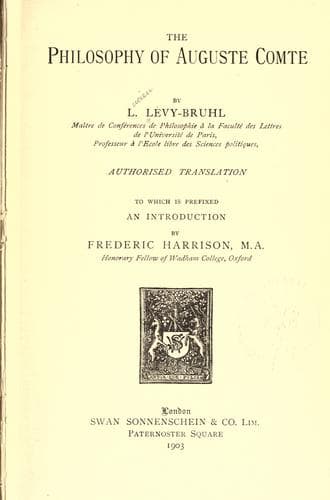
In the eyes of philosophers, mathematics has always occupied a
privileged place among the sciences. Plato located their object in an
intermediate region between the world of sensible phenomena and that
of intelligible realities. On the one hand mathematical objects, and
in particular the geometrical figures, appeal to the imagination as
sensible things; on the other hand, mathematical truths like ideas
and the relations between ideas, are characterised by immutable and
eternal fixity. This is why the study of mathematics is an excellent
preparation for philosophy, which is the science of ideas. While
still leaving to the mind the help of direct sensible perception, it
accustoms it to permanent truth. During the whole of antiquity the
science of mathematics, as the name indicates, was pre-eminently _the_
science. The science of physics, less sure of its object and of its
method, was hardly distinguished from philosophical speculation, and
lent itself with difficulty to the purely scientific form.
For Plato then, and for those who followed him, mathematics has
characteristics which distinguish it from the study of phenomena. In
a certain measure, it partakes of the nature of science, conceived
as bearing upon _what is_, upon the absolute reality which is
neither subject to change nor to motion. It is true that they start
from definitions and hypotheses. But, once the principles are
established, they are developed _a priori_ by a succession of necessary
demonstrations like the dialectics of ideas.
This conception offers a mixture of metaphysical and positive elements.
It implies that the object of science is reality such as it is in
itself; but, at the same time, it sees in the demonstration the
essential character of science. A long evolution, which culminates in
Comte’s doctrine, has driven the metaphysical elements out of science
while the other elements subsist in it still. Far from saying with
Plato or with his successors that there is no science of the phenomenon
or of that which passes away, Comte thinks on the contrary, that the
only object of science is phenomenal reality so far as it is subject to
laws. Science has not to search for causes or substances; it suffices
for it to determine invariable relations.
Public-domain text, read in full here on John Shaqi.
Reviews
Reviews
No reviews yet
Be the first to share your thoughts on this work.
Elsewhere in the archive
Join the Discussion
Join the discussion
Sign in to leave a comment or review.
Sign InorCreate an account