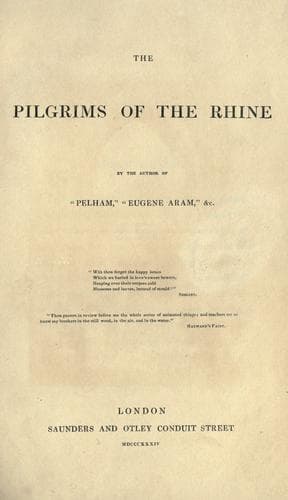
The Pilgrims of the RhineLytton, Edward Bulwer Lytton, Baron
Science
The Pilgrims of the Rhine
Lytton, Edward Bulwer Lytton, Baron
Fairies -- Fiction; Fantasy fiction; Rhine River Valley -- Fiction
They went afterwards to the celebrated cathedral, which is considered
one of the noblest of the architectural triumphs of Germany; but it is
yet more worthy of notice from the Pilgrim of Romance than the searcher
after antiquity, for here, behind the grand altar, is the Tomb of the
Three Kings of Cologne,--the three worshippers whom tradition humbled to
our Saviour. Legend is rife with a thousand tales of the relics of this
tomb. The Three Kings of Cologne are the tutelary names of that golden
superstition which has often more votaries than the religion itself from
which it springs and to Gertrude the simple story of Lucille sufficed
to make her for the moment credulous of the sanctity of the spot. Behind
the tomb three Gothic windows cast their “dim, religious light” over the
tessellated pavement and along the Ionic pillars. They found some of
the more credulous believers in the authenticity of the relics kneeling
before the tomb, and they arrested their steps, fearful to disturb the
superstition which is never without something of sanctity when contented
with prayer and forgetful of persecution. The bones of the Magi are
still supposed to consecrate the tomb, and on the higher part of
the monument the artist has delineated their adoration to the infant
Saviour.
That evening came on with a still and tranquil beauty, and as the sun
hastened to its close they launched their boat for an hour or two’s
excursion upon the Rhine. Gertrude was in that happy mood when the quiet
of nature is enjoyed like a bath for the soul, and the presence of
him she so idolized deepened that stillness into a more delicious and
subduing calm. Little did she dream as the boat glided over the water,
and the towers of Cologne rose in the blue air of evening, how few were
those hours that divided her from the tomb! But, in looking back to the
life of one we have loved, how dear is the thought that the latter days
were the days of light, that the cloud never chilled the beauty of the
setting sun, and that if the years of existence were brief, all that
existence has most tender, most sacred, was crowded into that space!
Nothing dark, then, or bitter, rests with our remembrance of the lost:
_we_ are the mourners, but pity is not for the mourned,--our grief is
purely selfish; when we turn to its object, the hues of happiness are
round it, and that very love which is the parent of our woe was the
consolation, the triumph, of the departed!
The majestic Rhine was calm as a lake; the splashing of the oar only
broke the stillness, and after a long pause in their conversation,
Gertrude, putting her hand on Trevylyan’s arm, reminded him of a
promised story: for he too had moods of abstraction, from which, in her
turn, she loved to lure him; and his voice to her had become a sort of
want.
Public-domain text, read in full here on John Shaqi.
Reviews
Reviews
No reviews yet
Be the first to share your thoughts on this work.
Elsewhere in the archive
Join the Discussion
Join the discussion
Sign in to leave a comment or review.
Sign InorCreate an account