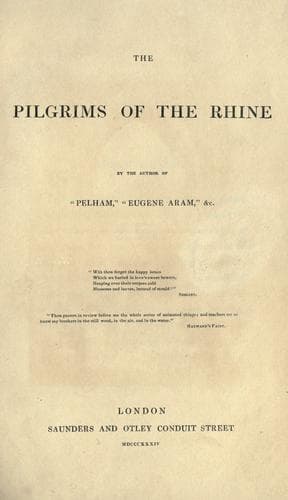
The Pilgrims of the RhineLytton, Edward Bulwer Lytton, Baron
Science
The Pilgrims of the Rhine
Lytton, Edward Bulwer Lytton, Baron
Fairies -- Fiction; Fantasy fiction; Rhine River Valley -- Fiction
Something there is in recollections of such times and scenes that seem
not to belong to real life, but are rather an episode in its history;
they are like some wandering into a more ideal world; they refuse to
blend with our ruder associations; they live in us, apart and alone, to
be treasured ever, but not lightly to be recalled. There are none living
to whom we can confide them,--who can sympathize with what then we
felt? It is this that makes poetry, and that page which we create as a
confidant to ourselves, necessary to the thoughts that weigh upon the
breast. We write, for our writing is our friend, the inanimate paper is
our confessional; we pour forth on it the thoughts that we could tell
to no private ear, and are relieved, are consoled. And if genius has
one prerogative dearer than the rest, it is that which enables it to do
honour to the dead,--to revive the beauty, the virtue that are no more;
to wreathe chaplets that outlive the day around the urn which were else
forgotten by the world!
When the poet mourns, in his immortal verse, for the dead, tell me not
that fame is in his mind! It is filled by thoughts, by emotions that
shut out the living. He is breathing to his genius--to that sole and
constant friend which has grown up with him from his cradle--the sorrows
too delicate for human sympathy! and when afterwards he consigns the
confession to the crowd, it is indeed from the hope of honour--, honour
not for himself, but for the being that is no more.
CHAPTER XVII. LETTER FROM TREVYLYAN TO -----.
COBLENTZ.
Public-domain text, read in full here on John Shaqi.
Reviews
Reviews
No reviews yet
Be the first to share your thoughts on this work.
Elsewhere in the archive
Join the Discussion
Join the discussion
Sign in to leave a comment or review.
Sign InorCreate an account