But Lounsbury was not met. On one such ramble, however, an incident
occurred that was far-reaching, if not fatal, in its results. She was
going, homeward slowly, when she saw, approaching, an ambulance from
Brannon, drawn by a four-mule team. She started timidly aside; then
paused. The vehicle was filled with ladies. A half-dozen, who were
talking and laughing merrily, occupied the lengthwise seats of the
carriage. One sat beside the driver. Dallas put herself in their path,
and waited.
How often she had watched these same ladies canter out of post on their
horseback rides, officers attending them; or seen them make a rollicking
walking-party to the bluff-top. And she had pictured how, some day, they
would be ferried to the bend. They could not have heard how her father
talked. If they had they would not blame her. If they passed her, they
would smile and bow--maybe stop to speak!
She was all aglow, now. The ambulance rolled near. It was closed on its
sides, and the women within could not see her. The woman on the
seat--pretty, slender, daintily clad--did. Dallas leaned forward
eagerly, face flushed, eyes shining.
The woman also leaned forward, and looked Dallas up and down,
searchingly, coldly. Her lips were set in a sneer. Her eyes frowned.
Then, the ambulance bowled smartly along, the driver catching at a
leader with his whip.
"Who's that, Mrs. Cummings?" The women in the rear of the vehicle were
peering out.
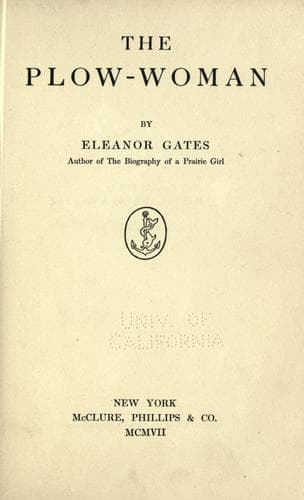
Mrs. Cummings answered over her shoulder. "Why, it's The Plow-Woman."
There were "Ohs" and "Ahs"--and laughter.
The girl by the roadside heard. Slighted, rebuffed, wounded to the
quick, she stumbled homeward, her sight blinded by tears.
She did not wait for Lounsbury again. Once she thought of writing him,
of summoning him through a note given Squaw Charley. But recalling her
father's treatment of the storekeeper, she questioned if the latter
would heed her message. She felt herself isolated. But no hint of her
bitterness was allowed to reach Marylyn. The younger girl knew only
bright words, and unceasing, unselfish care.
For one thing Dallas was deeply thankful: Matthews did not trouble the
shack. David Bond had told her that when the troops left for the summer
campaign, the interpreter would ride with them, the evangelist being
retained at the fort to fill the other's place. The latter declared
that, by the pilot's report, Lounsbury's name made Matthews "lay back
his ears," but that he no longer stormed about losing the claim.
Public-domain text, read in full here on John Shaqi.
Reviews
Reviews
No reviews yet
Be the first to share your thoughts on this work.
Elsewhere in the archive
Join the Discussion
Join the discussion
Sign in to leave a comment or review.
Sign InorCreate an account