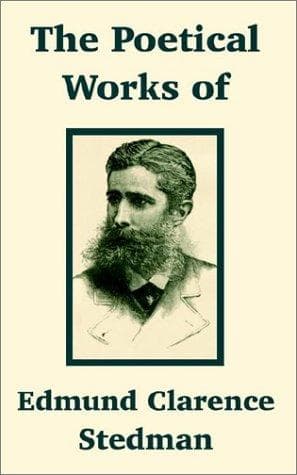
The poetical works of Edmund Clarence StedmanStedman, Edmund Clarence
General
The poetical works of Edmund Clarence Stedman
Stedman, Edmund Clarence
American poetry -- 19th century
Sudden there also fell
A summons like a knell:
Every ear the words could hear,—
Whence spoken, who could tell?
“What ship is this? where bound?”
Gods, what a dismal sound!
A stranger, and in danger,
Sailing near.
“The Virginia, on her route
From the Mersey, seven days out;
Fore and aft, our trusty craft
Carries a thousand souls, about.”
“All these souls may travel still,
Westward bound, if so they will;
Bodies rather, I would gather!”
Loud he laughed.
“Who is’t that hails so rude,
And for what this idle mood?
Words like these, on midnight seas,
Bode no friend nor fortune good!”
“Care not to know my name,
But whence I lastly came,
At leisure, for my pleasure,
Ask the breeze.
“To the people of your port
Bear a message of this sort:
Say, I haste unto the West,
A sharer of their sport.
Let them sweep the houses clean:
Their fathers did, I ween,
When hearing of my nearing
As a guest!
“As by Halifax ye sail
And the steamship England hail,
Of me, then, bespeak her men;
She took my latest mail,—
’Twas somewhere near this spot:
Doubtless they’ve not forgot.
Remind them (if you find them!)
Once again.
“Yet that you all may know
Who is’t that hailed you so,
(Slow he saith, and under breath,)
I leave my sign below!”
Then from our crowded hold
A dreadful cry uprolled,
Unbroken, and the token,—
It was Death.
THE DUKE’S EXEQUY.
ARRAS, A. D. 1404.
Clothed in sable, crowned with gold,
All his wars and councils ended,
Philip lay, surnamed The Bold:
Passing-bell his quittance tolled,
And the chant of priests ascended.
Mailéd knights and archers stand,
Thronging in the church of Arras;
Nevermore at his command
Shall they scour the Netherland,
Nevermore the outlaws harass;
Naught is left of his array
Save a barren territory;
Forty years of generous sway
Sped his princely hoards away,
Bartered all his gold for glory.
Forth steps Flemish Margaret then,
Striding toward the silent ashes;
And the eyes of arméd men
Fill with startled wonder, when
On the bier her girdle clashes!
Swift she drew it from her waist,
And the purse and keys it carried
On the ducal coffin placed;
Then with proud demeanor faced
Sword and shield of him she married.
“No encumbrance of the dead
Must the living clog forever;
From thy debts and dues,” she said,
“From the liens of thy bed,
We this day our line dissever.
“From thy hand we gain release,
Know all present by this token!
Let the dead repose in peace,
Let the claims upon us cease
When the ties that bound are broken.
“Philip, we have loved thee long,
But, in years of future splendor,
Burgundy shall count among
Bravest deeds of tale and song
This, our widowhood’s surrender.”
Public-domain text, read in full here on John Shaqi.
Reviews
Reviews
No reviews yet
Be the first to share your thoughts on this work.
Elsewhere in the archive
Join the Discussion
Join the discussion
Sign in to leave a comment or review.
Sign InorCreate an account