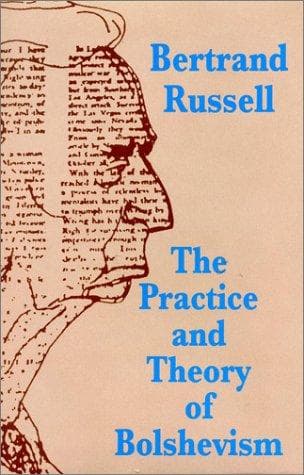
The Practice and Theory of BolshevismRussell, Bertrand
Religion
The Practice and Theory of Bolshevism
Russell, Bertrand
Communism -- Soviet Union -- History; Soviet Union -- Social conditions
Owing to unpopularity, the Bolsheviks have had to rely upon the army
and the Extraordinary Commission, and have been compelled to reduce
the Soviet system to an empty form. More and more the pretence of
representing the proletariat has grown threadbare. Amid official
demonstrations and processions and meetings the genuine proletarian
looks on, apathetic and disillusioned, unless he is possessed of
unusual energy and fire, in which case he looks to the ideas of
syndicalism or the I.W.W. to liberate him from a slavery far more
complete than that of capitalism. A sweated wage, long hours,
industrial conscription, prohibition of strikes, prison for slackers,
diminution of the already insufficient rations in factories where the
production falls below what the authorities expect, an army of spies
ready to report any tendency to political disaffection and to procure
imprisonment for its promoters--this is the reality of a system which
still professes to govern in the name of the proletariat.
At the same time the internal and external peril has necessitated the
creation of a vast army recruited by conscription, except as regards a
Communist nucleus, from among a population utterly weary of war, who
put the Bolsheviks in power because they alone promised peace.
Militarism has produced its inevitable result in the way of a harsh
and dictatorial spirit: the men in power go through their day's work
with the consciousness that they command three million armed men, and
that civilian opposition to their will can be easily crushed.
Public-domain text, read in full here on John Shaqi.
Reviews
Reviews
No reviews yet
Be the first to share your thoughts on this work.
Elsewhere in the archive
Join the Discussion
Join the discussion
Sign in to leave a comment or review.
Sign InorCreate an account