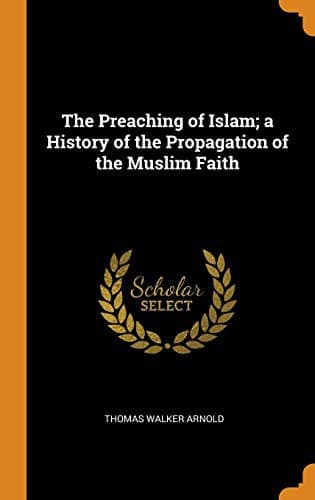
The Preaching of Islam: A History of the Propagation of the Muslim FaithArnold, Thomas Walker, Sir
Islamic
The Preaching of Islam: A History of the Propagation of the Muslim Faith
Arnold, Thomas Walker, Sir
Islam -- History; Islam -- Missions -- History; Islam -- Relations
It would appear that not until after the promulgation of the edict of
religious toleration in 1905 throughout the Russian empire and the
active Muslim propaganda that followed it, were cases observed of
Russians being converted to Islam, and those that have occurred are
ascribed to the strong attraction of the material help offered by the
Tatars to such converts and the influence of the moral strength of the
Muslims themselves. [792]
Not that the Tatars in Russia had been altogether inoperative in
promoting the spread of Islam during the preceding centuries. The
distinctly Hellenic type of face that is to be found among the
so-called Tatars of the Crimea has led to the conjecture that these
Muhammadans have absorbed into their community the Greek and Italian
populations that they found settled on the Crimean peninsula, and that
we find among them the Muhammadanised descendants of the indigenous
inhabitants, and of the Genoese colonists. [793] A traveller of the
seventeenth century tells us that the Tatars of the Crimea tried to
induce their slaves to become Muhammadans, and won over many of them to
this faith by promising them their liberty if they would be persuaded.
[794] Conversions to Islam from among the Tatars of the Crimea are also
reported after the proclamation of religious liberty in 1905. [795]
A brief reference may here be made to the Tatars in Lithuania, where
small groups of them have been settled since the early part of the
fifteenth century; these Muslim immigrants, dwelling in the midst of a
Christian population, have preserved their old faith, but (probably for
political reasons) do not appear to have attempted to proselytise. But
they have been in the habit of marrying Lithuanian and Polish women,
whose children were always brought up as Muslims, whereas no Muhammadan
girl was permitted to marry a Christian. The grand dukes of Lithuania
in the fifteenth century encouraged the marriage of Christian women
with their Tatar troops, on whom they bestowed grants of land and other
privileges. [796]
Public-domain text, read in full here on John Shaqi.
Reviews
Reviews
No reviews yet
Be the first to share your thoughts on this work.
Elsewhere in the archive
Join the Discussion
Join the discussion
Sign in to leave a comment or review.
Sign InorCreate an account