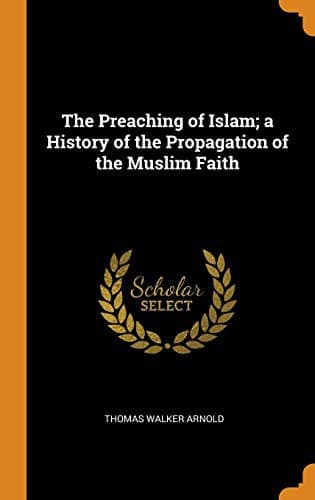
The Preaching of Islam: A History of the Propagation of the Muslim FaithArnold, Thomas Walker, Sir
Islamic
The Preaching of Islam: A History of the Propagation of the Muslim Faith
Arnold, Thomas Walker, Sir
Islam -- History; Islam -- Missions -- History; Islam -- Relations
[191] Id. p. 335.
[192] Id. p. 384.
[193] See A. von Kremer (1), vol. ii. pp. 490–2.
[194] The sack of Constantinople by the Crusaders in 1204 may be taken
as a type of the treatment that the Eastern Christians met with at the
hands of the Latins. Barhebræus complains that the monastery of Harran
was sacked and plundered by Count Goscelin, Lord of Emessa, in 1184,
just as though he had been a Saracen or a Turk. (Barhebræus (1), vol.
ii. pp. 506–8.)
[195] H. H. Milman, vol. ii. p. 218.
[196] A. von Kremer (1), vol. i. p. 172.
[197] Assemani, tom. iii. Pars Prima, pp. 130–1.
[198] Ibn Saʻd, Ṭabaqāt, vol. v. p. 258.
[199] Id. p. 285.
[200] Maḥbūb al-Manbijī, p. 358 (ll. 2–3).
[201] Ibn Saʻd, Ṭabaqāt, vol. v. p. 262.
[202] August Müller, vol. i. p. 440.
[203] Migne: Patr. Gr., tom. 96, pp. 1336–48.
[204] Migne: Patr. Gr., tom. 97, pp. 1528–9, 1548–61.
[205] Id. p. 1557.
[206] ʻAmr b. Mattai, p. 65.
[207] Id. p. 72.
[208] Risālah ʻAbd Allāh b. Ismāʻīl al-Hāshimī ilạ̄ ʻAbd al-Masīḥ b.
Isḥāq al-Kindī, pp. 1–37. (London, 1885.)
[209] Appendix I. For an account of Muslim controversial literature,
see Appendix II.
[210] Kindī, pp. 111–13.
[211] Balādhurī, pp. 430.
[212] It is very probable that the occasion of this visit of
Yazdānbakht to Baghdād was the summoning of a great assembly of the
leaders of all the religious bodies of the period, by al-Maʼmūn, when
it had come to his ears that the enemies of Islam declared that it owed
its success to the sword and not to the power of argument: in this
meeting, the Muslim doctors defended their religion against this
imputation, and the unbelievers are said to have acknowledged that the
Muslims had satisfactorily proved their point. (Aḥmad b. Yaḥyā b.
al-Murtaḍạ̄: Al-munyah wa’l-amal fī sharḥ kitāb al-milal wa’l-niḥal.
British Museum, Or. 3937, fol. 53 (b), ll. 9–11.)
[213] Kitāb al-Fihrist, vol. i. p. 338.
[214] Barhebræus (1), vol. iii. p. 194.
[215] Mārī b. Sulaymān, p. 101 (ll. 3–4).
[216] Barhebræus (1), vol. iii. p. 230.
[217] Id., (1), vol. iii. p. 248.
[218] All the Jacobite Patriarchs assumed the name of Ignatius; before
his consecration he was called Mark bar Qīqī.
[219] Barhebræus (1), vol. iii. pp. 288–90. Elias of Nisibis, pp.
153–4. He returned to the Christian faith, however, before his death,
which took place about twenty years later. Two similar cases are
recorded in the annals of the Jacobite Patriarchs of Antioch in the
sixteenth century: of these one, named Joshua, became a Muhammadan in
1517, but afterwards recanting fled to Cyprus (at that time in the
hands of the Venetians), where prostrate at the door of a church in
penitential humility he suffered all who went in or out to tread over
his body; the other, Niʻmat Allāh (flor. 1560), having abjured
Christianity for Islam, sought absolution of Pope Gregory XIII in Rome.
(Barhebræus (1), vol. ii. pp. 847–8.)
Public-domain text, read in full here on John Shaqi.
Reviews
Reviews
No reviews yet
Be the first to share your thoughts on this work.
Elsewhere in the archive
Join the Discussion
Join the discussion
Sign in to leave a comment or review.
Sign InorCreate an account