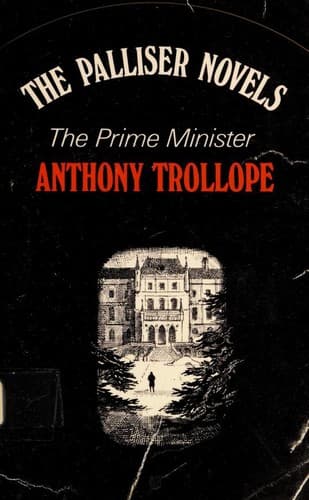
London (England) -- Fiction; Palliser, Plantagenet (Fictitious character) -- Fiction; Political fiction; Prime ministers -- Fiction
vulgarity? Of course it was all vulgar, but why should he tell her
so? She did not do it from any pleasure that she got from it.
The letters remained long unwritten, and then there came a moment in
which she resolved that they should not be written. The work was very
hard, and what good would come from it? Why should she make her hands
dirty, so that even her husband accused her of vulgarity? Would it
not be better to give it all up, and be a great woman, une grande
dame, of another kind,--difficult of access, sparing of her favours,
aristocratic to the backbone,--a very Duchess of duchesses? The role
would be one very easy to play. It required rank, money, and a little
manner,--and these she possessed. The old Duke had done it with ease,
without the slightest trouble to himself, and had been treated almost
like a god because he had secluded himself. She could make the change
even yet,--and as her husband told her that she was vulgar, she
thought she would make it.
But at last, before she had abandoned her desk and paper, there had
come to her another thought. Nothing to her was so distasteful as
failure. She had known that there would be difficulties, and had
assured herself that she would be firm and brave in overcoming them.
Was not this accusation of vulgarity simply one of the difficulties
which she had to overcome? Was her courage already gone from her? Was
she so weak that a single word should knock her over,--and a word
evidently repented of as soon as uttered? Vulgar! Well;--let her be
vulgar as long as she gained her object. There had been no penalty of
everlasting punishment denounced against vulgarity. And then a higher
idea touched her, not without effect,--an idea which she could not
analyse, but which was hardly on that account the less effective. She
did believe thoroughly in her husband, to the extent of thinking him
the fittest man in all the country to be its Prime Minister. His fame
was dear to her. Her nature was loyal; and though she might, perhaps,
in her younger days have been able to lean upon him with a more
loving heart had he been other than he was, brighter, more gay, given
to pleasures, and fond of trifles, still, she could recognise merits
with which her sympathy was imperfect. It was good that he should be
England's Prime Minister, and therefore she would do all she could to
keep him in that place. The vulgarity was a necessary essential. He
might not acknowledge this,--might even, if the choice were left to
him, refuse to be Prime Minister on such terms. But she need not,
therefore, give way. Having in this way thought it all out, she took
up her pen and completed the batch of letters before she allowed
herself to go to bed.
CHAPTER XX
Sir Orlando's Policy
Public-domain text, read in full here on John Shaqi.
Reviews
Reviews
No reviews yet
Be the first to share your thoughts on this work.
Elsewhere in the archive
Join the Discussion
Join the discussion
Sign in to leave a comment or review.
Sign InorCreate an account