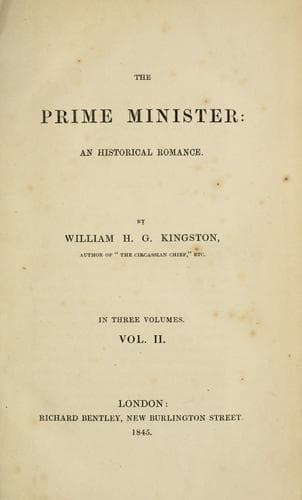
Portugal -- History -- Joseph, 1750-1777 -- Fiction
We find ourselves anticipating the course of events. As soon as the
Minister had ordered the erection of the gibbets, he bethought him it
might be as well to assemble some troops to guard them, lest, as the
rogues and vagabonds were pretty numerous, they should take it into
their heads to hang thereon the honest men instead. Soldiers were,
therefore, marched from all directions, so as to form a complete cordon
round Lisbon, allowing none to enter or go out without a pass from the
chief of police.
It was next thought advisable, since the aforesaid rogues and vagabonds
could scarcely be expected to be so convinced of the enormities of their
crimes, as to come and offer themselves voluntarily for punishment; and
that as they could not possibly be hung without being first caught, any
more than a hare can be cooked when still ranging her native fields,
that bodies of police should be selected, under fit and proper officers,
to apprehend the villains. Some were chosen among the military; but, as
the soldiers, it was suspected, might be too apt rather to imitate than
suppress the excesses, the greater number were respectable citizens, who
were glad to volunteer under good leaders, among whom our friend Captain
Pinto was the first chosen.
Even before the morning broke, Luis had again commenced his search for
Clara, which proved fruitless as before. On meeting his friend,
however, he accompanied him to visit the Minister, to whom he was about
to make some reports.
"I have not forgotten you, my young friend," said Carvalho, as soon as
he saw Luis. "Though all require my care, yours is a peculiar case, and
here is one who will be of more assistance to you than any other I can
afford;" and he called a man to his side, to whom he gave some
directions, and motioned towards Luis, when he added, "Farewell, and may
success attend you!" and again turned to the public business in which he
was engaged. That with Captain Pinto was soon despatched, when,
accompanied by Luis and the person the Minister had introduced to him,
he returned to the city.
Not to keep our readers in suspense as to who this personage was, we may
as well intimate that he was our acquaintance, the _ci-devant_ cobbler,
Antonio; though at present he bore none of the signs of his trade about
him, but rather had the appearance of a quiet notary, or sedate
shopkeeper.
"I will do my best to serve you, senhor," he said; "but I fear much we
shall not discover the young lady. In ordinary times I might have been
successful; but now I cannot set about the work in the way I would have
done."
Public-domain text, read in full here on John Shaqi.
Reviews
Reviews
No reviews yet
Be the first to share your thoughts on this work.
Elsewhere in the archive
Join the Discussion
Join the discussion
Sign in to leave a comment or review.
Sign InorCreate an account