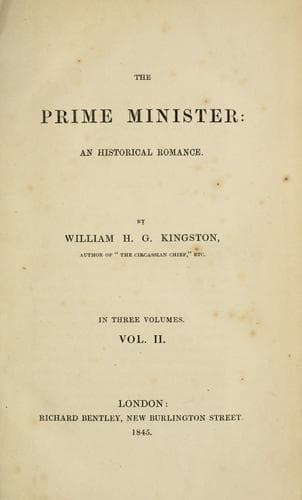
Portugal -- History -- Joseph, 1750-1777 -- Fiction
The young Marchioness, thus urged on by her confessor and her
mother-in-law, had no further reason to fly the advances of her royal
admirer; yet she trembled for the consequences;--she saw the yawning
gulf below her, yet she felt like a person on the summit of a lofty
cliff, with an involuntary inclination to leap from the edge, though
fully aware that destruction awaited her. How bitterly did she repent
that she had sacrificed her love, and stifled all the tender sentiments
of her nature, to follow the rugged and dangerous paths of ambition; but
there was now no power of receding left: her peace of mind, her
consciousness of rectitude, had deserted her; the past was full of
useless regrets; and though she felt that they were deceitful and
treacherous, the dazzling temptations of the future lured her on.
It was the custom of the King, when driving out at night, to make use of
the private carriage of a confidential attendant, who generally
accompanied him. This man, of the name of Texeira, was of low birth;
but, by various acts of a doubtful nature, had ingratiated himself into
his sovereign's favour; presuming on which, he frequently behaved in an
impertinent manner towards the nobles of the Court, who, ill-brooking
such behaviour, bore a determined hatred towards him. Texeira was
waiting in his carriage at the private entrance to the palace for the
coming of his sovereign, who proposed paying an earlier visit than usual
to the young Marchioness of Tavora. As the King appeared at the door,
the attendant stepped out to offer his assistance, and when both were
seated, the postillion was ordered to proceed forthwith in the direction
Texeira had already indicated to him.
The carriage stopped at the gateway of a palace situated in the western
part of the city, when the King, wrapping his cloak closely round his
features, descended and entered the building, while his attendant
retained his seat. The latter had remained there some time, when he
heard a voice, in a tone of authority, ordering his postillion to move
onward, and another carriage drew up at the gate of the palace. Senhor
Texeira, at first, forgetting himself, felt very much inclined to desire
his postillion not to stir from his position, but remembering instantly
that it was his duty rather to prevent the King from being discovered,
he checked the expressions rising to his tongue, and allowed his
carriage to proceed out of the way.
Public-domain text, read in full here on John Shaqi.
Reviews
Reviews
No reviews yet
Be the first to share your thoughts on this work.
Elsewhere in the archive
Join the Discussion
Join the discussion
Sign in to leave a comment or review.
Sign InorCreate an account