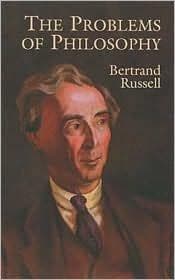
Knowledge, Theory of; Metaphysics; Philosophy -- Introductions
When, however, we speak of philosophy as a _criticism_ of knowledge, it
is necessary to impose a certain limitation. If we adopt the attitude
of the complete sceptic, placing ourselves wholly outside all knowledge,
and asking, from this outside position, to be compelled to return within
the circle of knowledge, we are demanding what is impossible, and our
scepticism can never be refuted. For all refutation must begin with
some piece of knowledge which the disputants share; from blank doubt,
no argument can begin. Hence the criticism of knowledge which philosophy
employs must not be of this destructive kind, if any result is to be
achieved. Against this absolute scepticism, no _logical_ argument can be
advanced. But it is not difficult to see that scepticism of this kind
is unreasonable. Descartes' 'methodical doubt', with which modern
philosophy began, is not of this kind, but is rather the kind of
criticism which we are asserting to be the essence of philosophy. His
'methodical doubt' consisted in doubting whatever seemed doubtful; in
pausing, with each apparent piece of knowledge, to ask himself whether,
on reflection, he could feel certain that he really knew it. This is the
kind of criticism which constitutes philosophy. Some knowledge, such as
knowledge of the existence of our sense-data, appears quite indubitable,
however calmly and thoroughly we reflect upon it. In regard to such
knowledge, philosophical criticism does not require that we should
abstain from belief. But there are beliefs--such, for example, as the
belief that physical objects exactly resemble our sense-data--which are
entertained until we begin to reflect, but are found to melt away
when subjected to a close inquiry. Such beliefs philosophy will bid us
reject, unless some new line of argument is found to support them.
But to reject the beliefs which do not appear open to any objections,
however closely we examine them, is not reasonable, and is not what
philosophy advocates.
The criticism aimed at, in a word, is not that which, without reason,
determines to reject, but that which considers each piece of apparent
knowledge on its merits, and retains whatever still appears to be
knowledge when this consideration is completed. That some risk of error
remains must be admitted, since human beings are fallible. Philosophy
may claim justly that it diminishes the risk of error, and that in some
cases it renders the risk so small as to be practically negligible. To
do more than this is not possible in a world where mistakes must occur;
and more than this no prudent advocate of philosophy would claim to have
performed.
CHAPTER XV. THE VALUE OF PHILOSOPHY
Public-domain text, read in full here on John Shaqi.
Reviews
Reviews
No reviews yet
Be the first to share your thoughts on this work.
Elsewhere in the archive
Join the Discussion
Join the discussion
Sign in to leave a comment or review.
Sign InorCreate an account