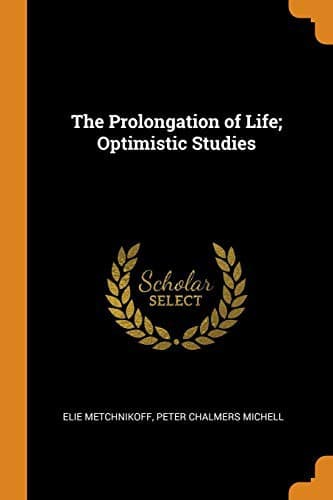
The Prolongation of Life: Optimistic StudiesMetchnikoff, Elie
Science
The Prolongation of Life: Optimistic Studies
Metchnikoff, Elie
Aging; Hygiene; Longevity; Older people -- Social conditions
M. Stern[123] has shown, in an elaborate memoir, that such antiseptics
as calomel, salol, [Greek: b]-naphthol, naphthaline, and camphor, when
administered in quantities compatible with health, do not disinfect
the digestive tube at all. More recently M. Strasburger[124] has shown
that when naphthaline has been given in quantities sufficient to impart
its odour to the fæces, the intestinal microbes, so far from being
diminished, are even increased in numbers. On the other hand, after
meals consisting of milk to which there has been added an antiseptic
in the proportion of a quarter of a gram to the litre, the intestinal
microbes are really reduced in number. Strasburger obtained his best
results with tanocol. Two persons who used, according to this method,
three to six grams of tanacol per day, displayed a notable reduction in
quantity of the intestinal flora.
Strasburger’s conclusion was that “the attempt to destroy the
intestinal microbes by the use of chemical agents has little chance of
success.” It cannot be denied that under special circumstances it is
possible to decrease the number of microbes, especially in the small
intestine. But this result is small and may be followed by the contrary
effect, for the natural means of defence of the intestine against
microbes are weakened, and the intestine itself may be harmed more than
the microbes.
Strasburger, moreover, is no convinced advocate of the use of
purgatives. The diminution of the sulpho-conjugate ethers in the
urine, which certainly may follow the use of purgatives, does not
necessarily indicate reduced putrefaction in the intestine, but may
point only to a lessened absorption of the bacterial products. Such an
interpretation is supported by an observed fact; in the case of a dog
belonging to Strasburger, which had a fistula of the small intestine,
the diarrhœa induced by calomel was accompanied by an indubitable
increase in the total quantity of intestinal microbes.
Strasburger thinks that the most favourable results can be obtained
by aiding the intestine in the discharge of its normal function. If
it can be brought to digest the food more completely, there is the
less pabulum left for the microbes. A similar result can be reached by
lowering the amount of food taken, and to this course the beneficial
effects of starvation in acute diseases of the intestine may be
attributed.
The general conclusion, reached after many experiments on the
disinfection of the intestine, is unfavourable. Very little is to be
expected from the method. None the less I cannot regard the matter
as definitely settled. Cohendy has investigated the effect on the
intestinal flora of thymol which was administered in several cases with
the object of destroying parasites. From nine to twelve grammes of
thymol were administered to each patient in the space of three days,
and there was a notable antiseptic effect, Cohendy believing that the
quantity of microbes had been reduced to a thirteenth.
Public-domain text, read in full here on John Shaqi.
Reviews
Reviews
No reviews yet
Be the first to share your thoughts on this work.
Elsewhere in the archive
Join the Discussion
Join the discussion
Sign in to leave a comment or review.
Sign InorCreate an account