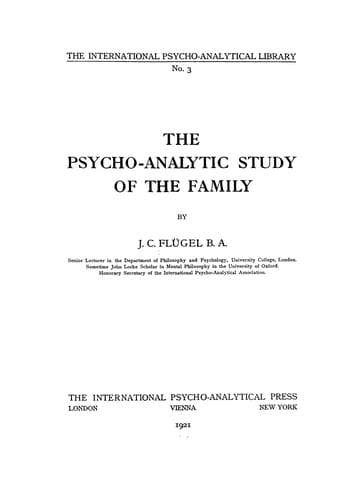
The psycho-analytic study of the familyFlugel, J. C. (John Carl)
Science
The psycho-analytic study of the family
Flugel, J. C. (John Carl)
Families; Marriage; Parent and child; Psychoanalysis
It would then be a hasty and disastrous conclusion if we were to infer
from the widespread occurrence of insufficient emancipation from the
family ties that it is our duty to endeavour to prevent the formation
of these ties or to deal harshly and destructively with them as soon as
they make their appearance. It would be as useless, as it would be cruel
and unwise, were we to attempt to abolish the relationship of love and
dependence that binds together parents and children, brothers and sisters:
such a course, if it ever attained a reasonable measure of success, would
almost certainly create evils greater than those which it was intended
to avert. The love of the parents towards the child is assuredly one of
the most essential and desirable features of a child's environment, if
the child's moral and emotional development is to proceed harmoniously,
spontaneously and easily. The lack of such love during the early years
may give rise to a lasting sense of injury, a permanent feeling of a void
or loss in some essential aspect of the emotional life, leading in its
turn to an insatiable craving for the affection that was not forthcoming
during that period of growth in which it was so urgently required; or
again, it may cause a lifelong bitterness or hostility towards the parents
(and through them towards mankind in general) for having withheld the
love, appreciation and encouragement which the young child so much desires
and needs; or once again, it may lead to a turning inward of the child's
affections, when these meet with no response, so that the individual
becomes self-centred and narcissistic, bestowing solely on himself the
interest and affection which under happier circumstances would have been
available for the pleasure and profit of those with whom he comes in
contact; or finally it may lead to serious delinquency or be responsible
for a whole career of crime.
Far therefore from attempting to inhibit or destroy the love of parent
and child, it becomes necessary on the contrary to emphasise the need,
and indeed the moral right, of every child to develop its affections in
this manner, and to urge again the plea now being put forward by the more
thoughtful class of social reformers, that every child should be born in
such conditions as to make it possible and likely that he will receive
such measure of care and affection as he stands in need of. The unwanted
child--the child who for social, psychological or economic reasons, is
not welcomed by his parents,--starts life under a disadvantage in this
respect, a disadvantage that may sometimes lead to the most serious
consequences both to himself and to society[266].
Public-domain text, read in full here on John Shaqi.
Reviews
Reviews
No reviews yet
Be the first to share your thoughts on this work.
Elsewhere in the archive
Join the Discussion
Join the discussion
Sign in to leave a comment or review.
Sign InorCreate an account