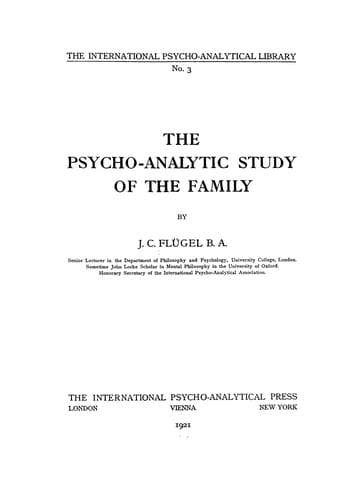
The psycho-analytic study of the familyFlugel, J. C. (John Carl)
Science
The psycho-analytic study of the family
Flugel, J. C. (John Carl)
Families; Marriage; Parent and child; Psychoanalysis
to his own prospects and importance[43]), the individual finds in the
noble parents of the myth the re-embodiment of those conceptions which
had become untenable as regards the real world. The series of legends (in
so far as they immediately concern us here) thus serve to express the
persistence in the Unconscious of the original infantile idealisation
of the parents as a consolation for the loss of the parent ideal which
an appreciation of the actual human imperfections of the parents has
inevitably brought in its train.
[Sidenote: Exaggerated love concealing hate]
The manifestations of the hate, as distinct from the love, elements of the
Œdipus complex, may also, when subjected to repression in the course of
moral development, assume a negative form--in this case usually appearing
as a morbid and exaggerated, but of course relatively superficial, love
for the hated parent; a love which constantly tends to find expression in
somewhat forced and unnatural exhibitions of affection. This superficial
love is often accompanied by an unreasoning anxiety as to the welfare of
the parent in question and a persistent dread lest he or she should come
to some harm. This symptom merely constitutes a form of repression of
the unconscious wish that the parent _should_ come to some harm. Persons
afflicted with a neurotic anxiety of this kind will frequently suffer very
greatly at the death of the parent concerning whom the anxiety is felt;
for this event constitutes the supreme gratification of the unconscious
and repressed desires, thus calling for an exceptionally vigorous effort
on the part of the repressing force in its endeavour to substitute in
consciousness an emotion of the opposite quality to that which would be
felt if the repressed tendencies held undisputed sway.
[Sidenote: Open parent-hatred]
Quite frequently however--in this respect unlike the love tendencies--the
hate impulse may manifest itself with a very considerable degree of
frankness and directness, leading to openly hostile relations to the
parent, which may persist throughout life. In such cases it will usually
be found that the original hatred as a consequence of jealousy or envy
has been supplemented by vindictive feelings arising from a (real or
imaginary) attitude of cruelty or tyranny on the part of the hated parent
towards the child or towards some third member of the family, to whom the
child's love and sympathy has gone out.
Public-domain text, read in full here on John Shaqi.
Reviews
Reviews
No reviews yet
Be the first to share your thoughts on this work.
Elsewhere in the archive
Join the Discussion
Join the discussion
Sign in to leave a comment or review.
Sign InorCreate an account