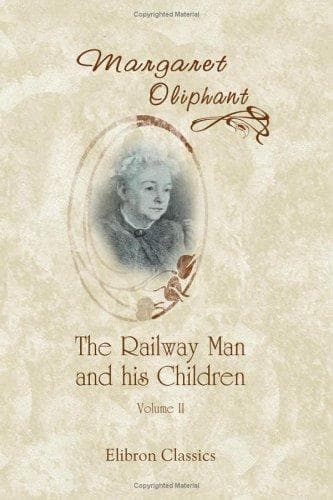
The Railway Man and His ChildrenOliphant, Mrs. (Margaret)
General
The Railway Man and His Children
Oliphant, Mrs. (Margaret)
Children of the rich -- Fiction; Families -- Fiction; Forgery -- Fiction; Scotland -- Fiction; Social classes -- Fiction
The husband and wife met with perhaps a greater sense of satisfaction
and pleasure than either had anticipated feeling when they parted.
Marriage is a curious thing notwithstanding all the ill that is said of
it. They had not been long married; they had not been exactly what
people call in love with each other; nor was James Rowland at all a
sentimental person. Yet there is something in that old-fashioned
expression which speaks of making two persons one flesh, which has a
most powerful influence. They meet as people only can meet whose
interests are one, who are fain to confide everything that affects them
to the bosom of the other, who is theirself. The thing is indescribable;
it is simple as a b c to those who have experienced it. It would
probably be impossible without the other circumstances of the union, yet
it is superior to all the rest--the most essential, the most noble. Both
these persons had been disturbed and troubled by various matters
peculiar to themselves; Rowland by the problem of his children, Evelyn
by other problems not unlike, yet so different from his. When they met,
there seemed an instant lull in these disturbances. The two-fold being
was now complete, and was able to deal with all problems.
Rowland had travelled by night, as busy men so often get the habit of
doing, and Evelyn superintended the excellent breakfast he always made,
and looked on at the satisfaction of that admirable appetite with much
complacency, before she asked any questions. She was not a woman who was
fond of asking questions. She awaited confidences, and did not press
them; which is a very good way for those who can do it, but not perhaps
very easy to an anxious mind. The difference of her position from that
of a mother was, that she was interested without being anxious, and this
made her also more charitable in judging, and probably would make her
less hard upon the shortcomings of the children. She was very much
interested, but she was calm, and it was not to her a question of life
and death. It was not till he had eaten the very last spoonful of
marmalade and piece of roll, of which he was capable, that she said
“Well?” looking with a smile into his eyes.
“Well--,” he said with satisfaction, pushing back his seat from the
table, “you’re ready to hear all about my troubles, Evelyn?”
“I hope they are not very bad troubles.”
“That will be very much as you take them, my dear. They might be bad
enough, but I’ve great confidence in my wife. In the first place, the
house is, I think, perfection; but you may not agree with me--you know I
have not your refinement. It stands on a green knoll overlooking the
Clyde, with a background of the most beautiful hills in the world, and
for the foreground the grand Firth--and all the wealth and life that
pass over it---- But,” he said pausing, and with a half shamefaced
laugh, “I’ve told you all that before.”
“Yes, you have told me before; but that does not take away my interest.
Tell me more.”
Public-domain text, read in full here on John Shaqi.
Reviews
Reviews
No reviews yet
Be the first to share your thoughts on this work.
Elsewhere in the archive
Join the Discussion
Join the discussion
Sign in to leave a comment or review.
Sign InorCreate an account