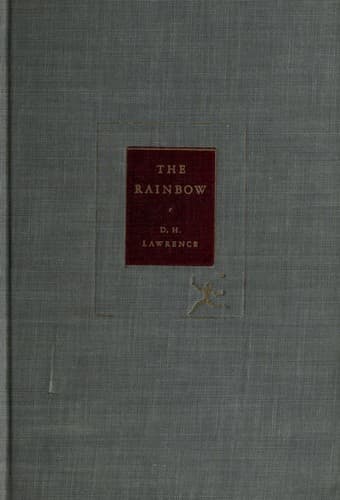
Domestic fiction; Family -- England -- Midlands -- Fiction; Midlands (England) -- Fiction
To Anna, the baby was a complete bliss and fulfilment. Her desires sank
into abeyance, her soul was in bliss over the baby. It was rather a
delicate child, she had trouble to rear it. She never for a moment
thought it would die. It was a delicate infant, therefore it behoved
her to make it strong. She threw herself into the labour, the child was
everything. Her imagination was all occupied here. She was a mother. It
was enough to handle the new little limbs, the new little body, hear
the new little voice crying in the stillness. All the future rang to
her out of the sound of the baby’s crying and cooing, she balanced the
coming years of life in her hands, as she nursed the child. The
passionate sense of fulfilment, of the future germinated in her, made
her vivid and powerful. All the future was in her hands, in the hands
of the woman. And before this baby was ten months old, she was again
with child. She seemed to be in the fecund of storm life, every moment
was full and busy with productiveness to her. She felt like the earth,
the mother of everything.
Brangwen occupied himself with the church, he played the organ, he
trained the choir-boys, he taught a Sunday-school class of youths. He
was happy enough. There was an eager, yearning kind of happiness in him
as he taught the boys on Sundays. He was all the time exciting himself
with the proximity of some secret that he had not yet fathomed.
In the house, he served his wife and the little matriarchy. She loved
him because he was the father of her children. And she always had a
physical passion for him. So he gave up trying to have the spiritual
superiority and control, or even her respect for his conscious or
public life. He lived simply by her physical love for him. And he
served the little matriarchy, nursing the child and helping with the
housework, indifferent any more of his own dignity and importance. But
his abandoning of claims, his living isolated upon his own interest,
made him seem unreal, unimportant.
Anna was not publicly proud of him. But very soon she learned to be
indifferent to public life. He was not what is called a manly man: he
did not drink or smoke or arrogate importance. But he was her man, and
his very indifference to all claims of manliness set her supreme in her
own world with him. Physically, she loved him and he satisfied her. He
went alone and subsidiary always. At first it had irritated her, the
outer world existed so little to him. Looking at him with outside eyes,
she was inclined to sneer at him. But her sneer changed to a sort of
respect. She respected him, that he could serve her so simply and
completely. Above all, she loved to bear his children. She loved to be
the source of children.
Public-domain text, read in full here on John Shaqi.
Reviews
Reviews
No reviews yet
Be the first to share your thoughts on this work.
Elsewhere in the archive
Join the Discussion
Join the discussion
Sign in to leave a comment or review.
Sign InorCreate an account