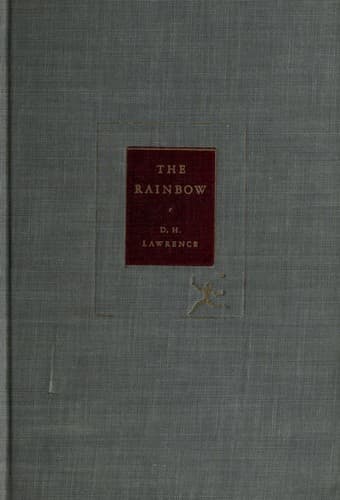
Domestic fiction; Family -- England -- Midlands -- Fiction; Midlands (England) -- Fiction
In hardness and bitterness of soul, Ursula knew that Winifred was
become her uncle’s lover. She was glad. She had loved them both. Now
she wanted to be rid of them both. Their marshy, bitter-sweet
corruption came sick and unwholesome in her nostrils. Anything, to get
out of the foetid air. She would leave them both for ever, leave for
ever their strange, soft, half-corrupt element. Anything to get away.
One night Winifred came all burning into Ursula’s bed, and put her arms
round the girl, holding her to herself in spite of unwillingness, and
said,
“Dear, my dear—shall I marry Mr. Brangwen—shall I?”
The clinging, heavy, muddy question weighed on Ursula intolerably.
“Has he asked you?” she said, using all her might of hard resistance.
“He’s asked me,” said Winifred. “Do you want me to marry him, Ursula?”
“Yes,” said Ursula.
The arms tightened more on her.
“I knew you did, my sweet—and I will marry him. You’re _fond_ of him,
aren’t you?”
“I’ve been _awfully_ fond of him—ever since I was a child.”
“I know—I know. I can see what you like in him. He is a man by himself,
he has something apart from the rest.”
“Yes,” said Ursula.
“But he’s not like you, my dear—ha, he’s not as good as you. There’s
something even objectionable in him—his thick thighs—”
Ursula was silent.
“But I’ll marry him, my dear—it will be best. Now say you love me.”
A sort of profession was extorted out of the girl. Nevertheless her
mistress went away sighing, to weep in her own chamber.
In two days’ time Ursula left Wiggiston. Miss Inger went to Nottingham.
There was an engagement between her and Tom Brangwen, which the uncle
seemed to vaunt as if it were an assurance of his validity.
Brangwen and Winifred Inger continued engaged for another term. Then
they married. Brangwen had reached the age when he wanted children. He
wanted children. Neither marriage nor the domestic establishment meant
anything to him. He wanted to propagate himself. He knew what he was
doing. He had the instinct of a growing inertia, of a thing that
chooses its place of rest in which to lapse into apathy, complete,
profound indifference. He would let the machinery carry him; husband,
father, pit-manager, warm clay lifted through the recurrent action of
day after day by the great machine from which it derived its motion. As
for Winifred, she was an educated woman, and of the same sort as
himself. She would make a good companion. She was his mate.
Chapter XIII.
THE MAN’S WORLD
Ursula came back to Cossethay to fight with her mother. Her schooldays
were over. She had passed the matriculation examination. Now she came
home to face that empty period between school and possible marriage.
At first she thought it would be just like holidays all the time, she
would feel just free. Her soul was in chaos, blinded suffering, maimed.
She had no will left to think about herself. For a time she must just
lapse.
Public-domain text, read in full here on John Shaqi.
Reviews
Reviews
No reviews yet
Be the first to share your thoughts on this work.
Elsewhere in the archive
Join the Discussion
Join the discussion
Sign in to leave a comment or review.
Sign InorCreate an account