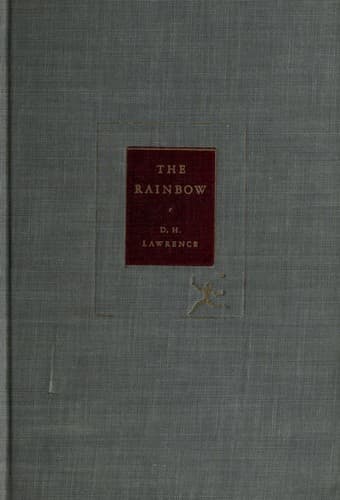
Domestic fiction; Family -- England -- Midlands -- Fiction; Midlands (England) -- Fiction
So she waited till Friday. Kingston-on-Thames had been an exciting
dream. Here she could feel the hard, raw reality. So she knew that this
would come to pass. Because nothing was ever fulfilled, she found,
except in the hard limited reality. She did not want to be a teacher in
Ilkeston, because she knew Ilkeston, and hated it. But she wanted to be
free, so she must take her freedom where she could.
On Friday her father said there was a place vacant in Brinsley Street
school. This could most probably be secured for her, at once, without
the trouble of application.
Her heart halted. Brinsley Street was a school in a poor quarter, and
she had had a taste of the common children of Ilkeston. They had
shouted after her and thrown stones. Still, as a teacher, she would be
in authority. And it was all unknown. She was excited. The very forest
of dry, sterile brick had some fascination for her. It was so hard and
ugly, so relentlessly ugly, it would purge her of some of her floating
sentimentality.
She dreamed how she would make the little, ugly children love her. She
would be so _personal._ Teachers were always so hard and impersonal.
There was no vivid relationship. She would make everything personal and
vivid, she would give herself, she would give, give, give all her great
stores of wealth to her children, she would make them so happy, and
they would prefer her to any teacher on the face of the earth.
At Christmas she would choose such fascinating Christmas cards for
them, and she would give them such a happy party in one of the
class-rooms.
The headmaster, Mr. Harby, was a short, thick-set, rather common man,
she thought. But she would hold before him the light of grace and
refinement, he would have her in such high esteem before long. She
would be the gleaming sun of the school, the children would blossom
like little weeds, the teachers like tall, hard plants would burst into
rare flower.
The Monday morning came. It was the end of September, and a drizzle of
fine rain like veils round her, making her seem intimate, a world to
herself. She walked forward to the new land. The old was blotted out.
The veil would be rent that hid the new world. She was gripped hard
with suspense as she went down the hill in the rain, carrying her
dinner-bag.
Through the thin rain she saw the town, a black, extensive mount. She
must enter in upon it. She felt at once a feeling of repugnance and of
excited fulfilment. But she shrank.
She waited at the terminus for the tram. Here it was beginning. Before
her was the station to Nottingham, whence Theresa had gone to school
half an hour before; behind her was the little church school she had
attended when she was a child, when her grandmother was alive. Her
grandmother had been dead two years now. There was a strange woman at
the Marsh, with her Uncle Fred, and a small baby. Behind her was
Cossethay, and blackberries were ripe on the hedges.
Public-domain text, read in full here on John Shaqi.
Reviews
Reviews
No reviews yet
Be the first to share your thoughts on this work.
Elsewhere in the archive
Join the Discussion
Join the discussion
Sign in to leave a comment or review.
Sign InorCreate an account