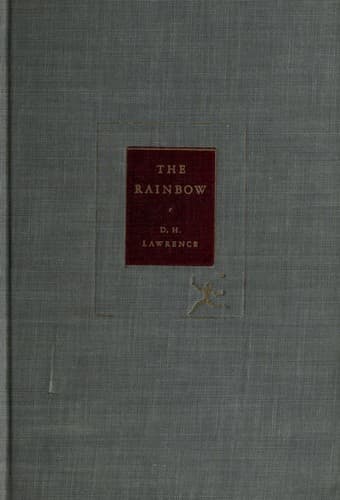
Domestic fiction; Family -- England -- Midlands -- Fiction; Midlands (England) -- Fiction
Oh, and sometimes she felt as if she would go mad. What did it matter,
what did it matter if their books were dirty and they did not obey? She
would rather, in reality, that they disobeyed the whole rules of the
school, than that they should be beaten, broken, reduced to this
crying, hopeless state. She would rather bear all their insults and
insolences a thousand times than reduce herself and them to this.
Bitterly she repented having got beside herself, and having tackled the
boy she had beaten.
Yet it had to be so. She did not want to do it. Yet she had to. Oh,
why, why had she leagued herself to this evil system where she must
brutalize herself to live? Why had she become a school-teacher, why,
why?
The children had forced her to the beatings. No, she did not pity them.
She had come to them full of kindness and love, and they would have
torn her to pieces. They chose Mr. Harby. Well then, they must know her
as well as Mr. Harby, they must first be subjugate to her. For she was
not going to be made nought, no, neither by them, nor by Mr. Harby, nor
by all the system around her. She was not going to be put down,
prevented from standing free. It was not to be said of her, she could
not take her place and carry out her task. She would fight and hold her
place in this state also, in the world of work and man’s convention.
She was isolated now from the life of her childhood, a foreigner in a
new life, of work and mechanical consideration. She and Maggie, in
their dinner-hours and their occasional teas at the little restaurant,
discussed life and ideas. Maggie was a great suffragette, trusting in
the vote. To Ursula the vote was never a reality. She had within her
the strange, passionate knowledge of religion and living far
transcending the limits of the automatic system that contained the
vote. But her fundamental, organic knowledge had as yet to take form
and rise to utterance. For her, as for Maggie, the liberty of woman
meant something real and deep. She felt that somewhere, in something,
she was not free. And she wanted to be. She was in revolt. For once she
were free she could get somewhere. Ah, the wonderful, real somewhere
that was beyond her, the somewhere that she felt deep, deep inside her.
In coming out and earning her own living she had made a strong, cruel
move towards freeing herself. But having more freedom she only became
more profoundly aware of the big want. She wanted so many things. She
wanted to read great, beautiful books, and be rich with them; she
wanted to see beautiful things, and have the joy of them for ever; she
wanted to know big, free people; and there remained always the want she
could put no name to.
Public-domain text, read in full here on John Shaqi.
Reviews
Reviews
No reviews yet
Be the first to share your thoughts on this work.
Elsewhere in the archive
Join the Discussion
Join the discussion
Sign in to leave a comment or review.
Sign InorCreate an account