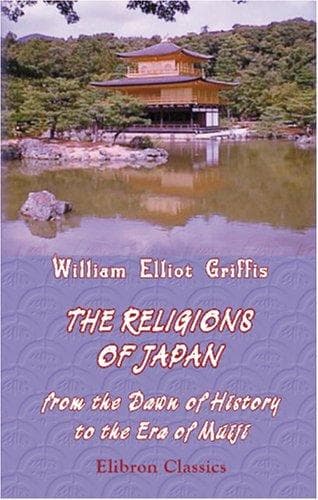
The Religions of Japan, from the Dawn of History to the Era of MéijiGriffis, William Elliot
Religion
The Religions of Japan, from the Dawn of History to the Era of Méiji
Griffis, William Elliot
Japan -- Religion
One who has lived alongside the great temples; who knows the daily
routine and sees what powerful engines of popular instruction they are;
who has been present at the great festivals and looked upon the mighty
kitchens and refectories in operation; and who has gone in and out among
their monasteries and examined their records, their genealogies and
their relics, can see how powerfully Buddhism has moulded the whole life
of the people through long ages. The village temple is often the epitome
and repository of the social life of the people now living, and of the
story of their ancestors for generations upon generations past. It is
the historico-genealogical society, the museum, the repository of
documents and trophies, the place of national thanksgiving and praise,
of public sorrow and farewell, a place of rendezvous and separation, the
starting-point of procession, and the centre of festival and joy; and
thus it is linked with the life of the people.
In other respects, also, the temple is like the old village cathedral of
mediaeval Europe. It is in many sects the centre of popular pleasure of
all sorts, both reputable and disreputable. Not only shops and bazaars,
fairs and markets, games and sports, cluster around it, but also
curiosities and works of popular art, the relics of war, and the
trophies of travel and adventure. Except that Buddhism--outside of
India--never had the unity of European Christianity, the Buddhist temple
is the mirror and encyclopaedia both of history and of contemporary
life. As fame and renown are necessary for the glory of the place or the
structure, favorite gods, or rather their idols, are frequently carried
about on "starring" tours. At the opening to public view of some famous
image or relic, a great festival or revival called Kai-chō is held,
which becomes a scene of trade and merry-making like that of the
mediaeval fair or kermis in Europe. The far-oriental is able as
skilfully as his western confrère, to mix business and religion and to
suppose that gain is godliness. Further, the manufacture of legend
becomes a thriving industry; while the not-infrequent sensation of a
popular miracle is manipulated by the bonzes--for priestcraft in all
ages and climes is akin throughout the world. It is no wonder that some
honest Japanese, incensed at the shams utilized by the religious, has
struck out like coin the proverb that rings true--"Good doctrine needs
no miracle."
The Bell and the Cemetery.
Public-domain text, read in full here on John Shaqi.
Reviews
Reviews
No reviews yet
Be the first to share your thoughts on this work.
Elsewhere in the archive
Join the Discussion
Join the discussion
Sign in to leave a comment or review.
Sign InorCreate an account