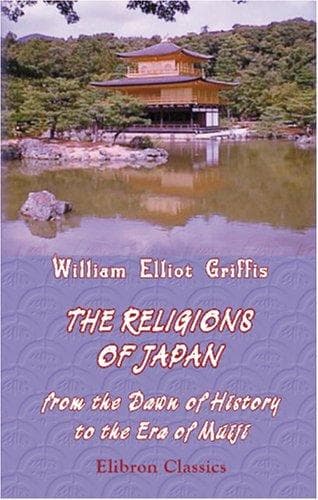
The Religions of Japan, from the Dawn of History to the Era of MéijiGriffis, William Elliot
Religion
The Religions of Japan, from the Dawn of History to the Era of Méiji
Griffis, William Elliot
Japan -- Religion
In adjusting the feudal relations of his vassals in Kiushiu, Iyéyasŭ
made great changes, and thus the political status of the Christians was
profoundly altered. The new daimiōs, carrying out the policy of their
predecessors who had been taught by the Jesuits, but reversing its
direction, began to persecute their Christian subjects, and to compel
them to renounce their faith. One of the leading opposers of the
Christians and their most cruel persecutor, was Kato, the zealous
Nichirenite. Like Brandt, the famous Iroquois Indian, who, in the Mohawk
Valley is execrated as a bloodthirsty brute, and on the Canadian side is
honored with a marble statue and considered not only as the translator
of the prayer-book but also as a saint; even also as Claverhouse, who,
in Scotland is looked upon as a murderous demon, but in England as a
conscientious and loyal patriot; so Kato, the _vir ter execrandus_ of
the Jesuits, is worshipped in his shrine at the Nichiren temple at
Ikégami, near Tōkiō,[13] and is praised by native historians as
learned, brave and true.
The Christians of Kiushiu, in a few cases, actually took up arms against
their new rulers and oppressors, though it was a new thing under the
Japanese sun for peasantry to oppose not only civil servants of the law,
but veterans in armor. Iyéyasŭ, now having time to give his attention
wholly to matters of government and to examine the new forces that had
entered Japanese life, followed Hidéyoshi in the suspicion that, under
the cover of the western religion, there lurked political designs. He
thought he saw confirmation of his theories, because the foreigners
still secretly or openly paid court to Hidéyori, and at the same time
freely disbursed gifts and gold as well as comfort to the persecuted.
Resolving to crush the spirit of independence in the converts and to
intimidate the foreign emissaries, Iyéyasŭ with steel and blood put
down every outbreak, and at last, in 1606, issued his edict[14]
prohibiting Christianity.
The Quarrels of the Christians.
Public-domain text, read in full here on John Shaqi.
Reviews
Reviews
No reviews yet
Be the first to share your thoughts on this work.
Elsewhere in the archive
Join the Discussion
Join the discussion
Sign in to leave a comment or review.
Sign InorCreate an account