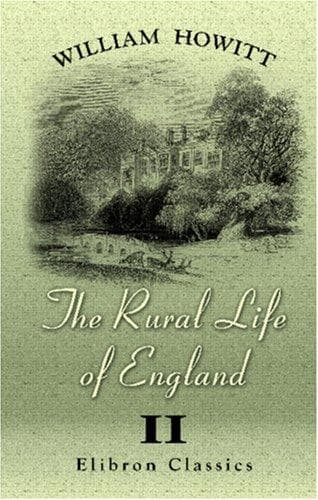
Country life -- England; England -- Social life and customs -- 19th century
But all was silent and lifeless. No person was to be discerned in the
court to which it opened; there were no signs of life except in the
cooing of some pigeons and the cawing of certain jackdaws. We went round
the outbuildings into the churchyard, which is level with the top of the
court-wall, and looks directly into it. We leaned over a massy parapet,
and looked down into this court; the spell of an invincible silence
seemed to cover the whole place. In the gravel walks which ran round the
court, there were traces of carriage wheels; but you felt as if no
carriage with the bustle and vivacity of active life could ever more
enter there. In the centre of the grass-plot, a basin surrounded by a
hedge of honeysuckle, and which had doubtless once possessed the life
and beauty of a fountain, now shewed only water, black, stagnant, and
covered with masses of yellow moss. We were close to the house; its
curtained windows gave it an air of habitation; but no sound nor visible
indication of the presence of man was about it. We walked along the
green and picturesque churchyard: the back of the buildings on this side
of the court bounded part of it; they were in the last state of decay;
wide gaps in the roof gave us a view into dark and dreary stables. We
came to the farm-yard, also joining the churchyard: it had the same
aspect of desertion. There was neither cattle nor ricks in it, but the
brandreth, or frame on which a rick once stood, littered with decaying
straw, and its air of desolation made more striking by a piece of old
wooden balustrade cast upon it. There were barn-doors standing wide
open; and the litter of the yard even appeared dusty and grey with age.
You felt sure no human foot could have disturbed it for years. We
descended from the churchyard, and went round the farm-buildings once
more towards the old “massy gate.” At the back of these buildings were
nailed the trophies of the gamekeeper by hundreds, we might, we think,
say thousands; wild cats, dried to blackness, stretched their downward
heads and legs from the wall; hawks, magpies, and jays, hung in tattered
remnants; but all grey and even green with age; and the heads of birds
in plenteous rows, nailed beak upward, were dried and shrivelled by the
sun, and winds, and frosts, of many summers and winters, till their
distinctive characters were lost. They all seemed to speak the same
silent language:--to say, Ay, this was once the abode of a prosperous
old family; here were abundance of friends, and dependents going to and
fro; horses and hounds going forth in vociferous joy; abroad was the
chase and the sound of the gun,--within were spits turning, and good
fellowship; but all this is long since over--a blight and a sorrow have
fallen here.
Public-domain text, read in full here on John Shaqi.
Reviews
Reviews
No reviews yet
Be the first to share your thoughts on this work.
Elsewhere in the archive
Join the Discussion
Join the discussion
Sign in to leave a comment or review.
Sign InorCreate an account