"Why," said he, "I have my ideas of divine wisdom and goodness, and I
wish to make these things square with them."
"And that," said I, "is just the rock on which you all split. Your ideas
of the divine goodness must be based on a complete view of the revealed
character and conduct of God. But you and your friends say, 'this and
that ought to be, or ought not to be,' and you try your Maker by that
measure. Now I say, 'he that reproveth God, let him answer it.' Are not
the things which I have quoted, parts of divine revelation, as much as
the flood and the passover?"
"I see that they are," said Mr. North.
"Do you believe that God is a spirit infinite, eternal, unchangeable, in
his being, wisdom, power, holiness, justice, goodness, and truth?"
"I do," said he.
"You believe this notwithstanding the apostasy, the destruction of Sodom
and Gomorrah, the flood, and the extirpation of the Canaanites."
"I do," said he, "so long as I receive the Bible as the Word of God."
"I think," said Mrs. North, "that the loss of the 'Central America' with
her four hundred passengers, tries my faith in God full as much as a
heathen's having his ear bored to spend his days with his wife and
children among God's covenant people."
"Then you do not worship the Goddess of Liberty, Mrs. North," said
I.--"'Art thou called being a servant? Care not for it. But if thou
mayest be made free, use it rather.'"
"That," said she, "seems to express my idea about bondage and freedom.
Of course it is not, theoretically, a blessing to be a slave. It may be,
practically, to some. But what strikes me oftentimes is the utter
inability of an abolitionist to say to a slave, under any circumstances,
'Care not for it.' His doctrine, rather, is, 'Art thou called being a
servant? If thou hast a Sharpe's rifle, or a John Brown's pike, use it
rather.' Or, 'Art thou called being a servant? If thou canst run for
Canada, use it rather.' Paul had not an abolitionist mind, that is very
clear. But," she continued, "do relieve my husband and enlighten me
also, by giving us your views about the Old Testament slavery, which I
presume you can do without seeming to arraign the character of God."
I replied, "This is a sinful race, and we are treated as such. Slavery
is one of God's chastisements. Instead of destroying every wicked nation
by war, pestilence, or famine, he grants some of them a reprieve, and
commutes their punishment from death to bondage. Those whom he allowed
to be slaves to his people Israel were highly favored; they enjoyed a
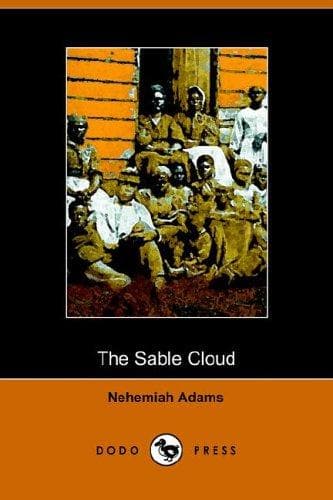
blessing which came to them disguised by the sable cloud of servitude;
but in their endless happiness many of them will bless God for the
bondage which joined them to the nation of Israel.
Public-domain text, read in full here on John Shaqi.
Reviews
Reviews
No reviews yet
Be the first to share your thoughts on this work.
Elsewhere in the archive
Join the Discussion
Join the discussion
Sign in to leave a comment or review.
Sign InorCreate an account