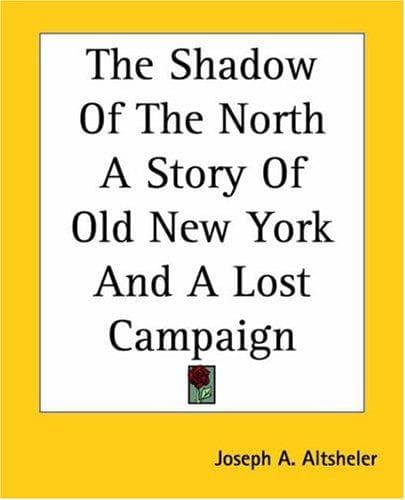
The Shadow of the North: A Story of Old New York and a Lost CampaignAltsheler, Joseph A. (Joseph Alexander)
History
The Shadow of the North: A Story of Old New York and a Lost Campaign
Altsheler, Joseph A. (Joseph Alexander)
United States -- History -- French and Indian War, 1754-1763 -- Juvenile fiction
"Assuredly I do, sir," said she who had been Molly Brant, the Mohawk,
but who was now the wife of the greatest man in the north
country. "Tis a goodly youth and he speaks well. I like him, and he
shall have the best our house can offer."
Colonel Johnson's mellow laugh rang out again.
"Spoken like a woman of spirit, Molly," he said. "I expected none the
less of you. It's in the blood of the Ganeagaono and had you answered
otherwise you would have been unworthy of your cousin, Daganoweda,
here."
The young Mohawk chieftain smiled. Johnson, who had married a girl of
their race, could jest with the Mohawks almost as he pleased, and
among themselves and among those whom they trusted the Indians were
fond of joking and laughter.
"The wife of Waraiyageh not only has a great chief for a husband," he
said, "but she is a great chief herself. Among the Wyandots she would
be one of the rulers."
The women were the governing power in the valiant Wyandot nation, and
Daganoweda could pay his cousin no higher compliment.
"We talk much," said Colonel Johnson, "but we must remember that our
friends are tired. They've come afar in bad weather. We must let them
rest now and give them refreshment."
He led the way to the light summer house that he had called a
bower. It was built of poles and thatch, and was open on the eastern
side, where it faced a fine creek running with a strong current. A
fire was burning in one corner, and a heavy curtain of tanned skins
could be draped over the wide doorway. Articles of women's apparel
hung on the walls, and others indicating woman's work stood
about. There were also chairs of wicker, and a lounge covered with
haircloth. It was a comfortable place, the most attractive that Robert
had seen in a long time, and his eyes responded to it with a glitter
that Colonel Johnson noticed.
"I don't wonder that you like it, lad," he said. "I've spent some
happy hours here myself, when I came in weary or worn from hunting or
fishing. But sit you down, all three of you. I'll warrant me that
you're weary enough, tramping through this wintry forest. Blunt, shove
the faggots closer together and make up a better fire."
The command was to a white servant who obeyed promptly, but Madame
Johnson herself had already shifted the chairs for the guests, and had
taken their deerskin cloaks. Without ceasing to be the great lady she
moved, nevertheless, with a lightness of foot and a celerity that was
all a daughter of the forest. Robert watched her with fascinated eyes
as she put the summer house in order and made it ready for the comfort
of her guests. Here was one who had acquired civilization without
losing the spirit of the wild. She was an educated and well bred
woman, the wife of the most powerful man in the colonies, and she was
at the same time a true Mohawk. Robert knew as he looked at her that
if left alone in the wilderness she could take care of herself almost
as well as her cousin, Daganoweda, the young chief.
Public-domain text, read in full here on John Shaqi.
Reviews
Reviews
No reviews yet
Be the first to share your thoughts on this work.
Elsewhere in the archive
Join the Discussion
Join the discussion
Sign in to leave a comment or review.
Sign InorCreate an account