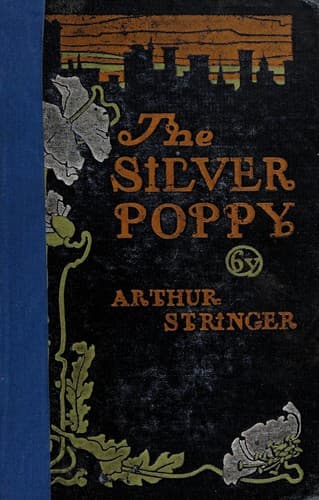
Authors -- Fiction; Canadian fiction; Impostors and imposture -- Fiction; New York (N.Y.) -- Social life and customs -- Fiction
"In one way it is, perhaps, and in another way it isn't."
But was this ethical Cæsarean section, he wondered, the only means of
bringing his belated offspring to light?
"I can understand that; it's a beautiful thing."
"But if I have written one I still have the power to write another." It
was the master losing himself in the message, the parent dying for the
child.
"Of course, but you mustn't--_please_ don't think for one moment that I
want to lay claim to it, now or at any time. I'm not a poetess, as you
know, and never could be one."
He fell to pacing the room once more.
"I was only thinking," she went on with slightly compressed lips, "of
you when I came to suggest the thing."
"I know, and it was very generous of you," he answered, as he began
rummaging through his manuscripts for the lines.
"You've written this thing, and, as you say, it lies in your power to
write something as good, or better. You've confessed you see no way of
getting rid of it, so, after all," she said wearily, "it's only a matter
of two hundred and fifty dollars."
Hartley looked up at her coldly.
"No, it's a great deal more than that," he said gravely, turning away
from her again. "Much more. But to be candid, just at the present moment
I am painfully in need of--of money. And I don't feel like arguing the
ethics of it all out to-day as I ought to do." Then he sighed heavily,
and added, "But I wish I were free."
So the offer was accepted and Cordelia carried away with her the
manuscript of The Need of War, troubled and weighed down with an
indeterminate sense of humiliation, yet feeling that out of the ashes of
that humiliation might ultimately rise the towers of a new strength.
As for the poem itself, she thought little about it; she was no lover of
blank verse. Her one consolation seemed to be a feelings--tragically
feminine--that she had drawn down to her a figure that before had always
seemed to shadow and chill her with its shadowy immaculacy.
CHAPTER XX
A POWER NOT HERSELF
Yet life's long silence, after song,
Can do thy lyric heart no wrong.
Once broken music fell from thee,
While now--now thou art harmony.
Those notes that soared from thee of old,
Wrapt in dusk wings they ne'er unfold,
Brood vocal in thy clouded eyes;
And in thy bosom's fall and rise--
O poor, sad, sea-like surging breast--
Is song itself made manifest!
JOHN HARTLEY, "The Lost Voice."
A song in the heart is worth two in the book.--"The Silver Poppy."
Public-domain text, read in full here on John Shaqi.
Reviews
Reviews
No reviews yet
Be the first to share your thoughts on this work.
Elsewhere in the archive
Join the Discussion
Join the discussion
Sign in to leave a comment or review.
Sign InorCreate an account