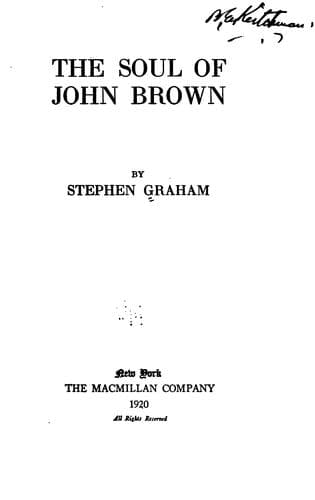
African Americans; United States -- Race relations
The Negro officer then began to receive the white man’s attention.
Having trained many colored officers, Negroes often of education and
means and refinement, and having given them commission and uniform,
the Staff came to the conclusion that they had made a mistake. The
white Southern officer stirred up trouble, the white ranker would not
salute. There was the usual sordid squabble in officers’ messes. And
then the upshot—a great number of Negro officers subjected to the
humiliation of losing their commissions and being placed in the ranks.
This discouragement necessarily set the Negro officer thinking. It
cultivated his resentment. It sowed in his heart the seed of national
disaffection.
The next serious trouble was that of the French women and the Negro.
The indifference of white women whether the man they walked with
was black or brown or white was taken as an intolerable affront by
Southerners. They felt called upon to interfere and save the French
woman from herself. The rape legend was imported, and every effort
was made to infect the French male with race prejudice. Happily, the
propaganda failed. For one thing, Puritanism does not easily take root
in a French heart, and for another, the French have no instinctive
horror of Negroes. Possibly the rape legend even made the Negro a
little ornamental from the point of view of _amour_. “Black American
troops in France have given rise to as many complaints of attempted
rape as all the rest of the army ‘Les troupes noires Americaines
en France ont donné lieu, a elle seules, a autant de plaintes pour
tentatives de viol, que tout le reste de l’Armée,’” as an army order
puts it.
Negro honor, however, demands that the charge be rebutted, and the
matter has been thoroughly investigated. There does not seem to be much
in it. As every one knows who served in the ranks, women of easy virtue
were extremely plentiful and complaisant. The need might easily have
been to protect the Negro from the women rather than the women from the
Negro.
The fact is simply that the Negro walking with a white woman is to the
Southern American White as a red rag to a bull. And as by nature this
White is unrestrained and unreasonable, he seeks by all means, fair or
foul, to part them.
Finally, the culmination of the story of the American Negro in the war
is that the White denied him any valor or prowess or military virtue of
any kind, said the Negro was a coward and a runaway and utterly useless
in the fighting line. Fighting units were taken off their allotted duty
and changed to labor units. Regiments were ordered home; whole brigades
were given as a present to the grateful French. They may have been
rather inefficient. But, if so, that was due to bad training. Negroes
have fought magnificently in America’s wars of the past. They are a
great fighting race, and they are capable of discipline.
Public-domain text, read in full here on John Shaqi.
Reviews
Reviews
No reviews yet
Be the first to share your thoughts on this work.
Elsewhere in the archive
Join the Discussion
Join the discussion
Sign in to leave a comment or review.
Sign InorCreate an account